
Quick Answer
Plant-based cleaning products use ingredients derived from plants as part of their formulation, but plant-based does not automatically mean safer or risk-free. Suitability for homes with children, pets or people with sensitive skin depends on the complete formulation, the intended use and how the product is handled. Check ingredient information, follow the label instructions and choose products suited to your household's needs.
You’ve probably seen more plant-based cleaning products on shelves in Qatar lately. But when a bottle says plant-based, naturally derived or non-toxic, one question naturally comes to mind:
What actually makes it different from the cleaner I already use?
And if you have children, pets or someone with sensitive skin at home, choosing the right cleaning products becomes even more important. But are plant-based cleaners actually a safer option for your household?
The answer isn’t in the label alone. It’s in the ingredients, how the formula works and what else is added to it.
Let’s break down what plant-based cleaning products actually contain, how they differ from other cleaning formulations, and what you should look for before bringing one into your home.
What Are Plant-Based Cleaning Products?
A plant-based cleaning product is a cleaning formula that uses ingredients derived from plants as part of its cleaning system.
That could mean surfactants derived from sources such as coconut, sugarcane or other plant-based raw materials, enzymes used to break down specific types of residue, or other plant-derived ingredients that perform a particular function in the formula.
For example, a plant-based cleaner may contain:
-
Plant-derived surfactants to help loosen and lift dirt, grease and oils.
-
Enzymes to help break down specific organic soils such as proteins, starches or fats.
-
Plant-derived acids, such as citric or lactic acid, for specific cleaning functions.
-
Essential oils or other naturally derived ingredients for fragrance or formulation purposes.
The important point is that “plant-based” does not mean the product is made entirely from plants. A cleaning product is still a carefully developed formula containing different ingredients, each with a specific job.
So when you see plant-based on a cleaner, don’t just ask, “Is it made from plants?” Ask a more useful question:
“Which ingredients are plant-derived, and what are they doing in the formula?”
That is what tells you what plant-based actually means.
Why Are These Ingredients Being Used in Plant-Based Cleaning Products?
Plant-based cleaning formulas are not built around one “hero” ingredient. Different ingredients work together to tackle different parts of the cleaning process.
Plant-Derived Surfactants: The Dirt-Lifting Base
Some plant-based formulations contain surfactants as cleansing agents that help water spread over a surface and lift away dirt, grease and oils.
Why they matter: A review published in Sci mentions that plant-derived surfactants can form the main cleaning base of a formula, helping remove everyday grime through a different ingredient source.
Cleaning Boosters: Tackling Mineral Buildup
Ingredients such as citric acid and lactic acid are naturally occurring acids that can have specific cleaning functions.
Why they matter: They may help break down mineral deposits and soap scum, which can otherwise contribute to visible buildup and residue on surfaces. A study published in the journal Environment International suggests that lactic acid acts as a remover of limescale, which is the chalky deposit that is caused by the deposition of calcium carbonate from hard water. The study also highlights that lactic acid has antibacterial properties.
Enzymes: Targeting Organic Stains
Enzymes are proteins that work on specific types of organic matter, including proteins, fats and starches.
Why they matter: They bring targeted cleaning action to organic stains and residue, allowing the formula to address soils that surfactants may not tackle in the same way.
Probiotics: Extending the Cleaning Action
Probiotics are beneficial microorganisms incorporated into some cleaning formulations.
Why they matter: In formulations designed with probiotics, they may continue interacting with organic matter after the initial cleaning process, giving the formula an additional approach to maintaining surfaces.
Preservatives: Keeping the Formula Stable
Preservatives are ingredients added to water-based products to help control microbial growth during storage and use.
Why they matter: They help maintain the stability and usability of the product over time, which is an important part of a well-designed cleaning formula.
Essential Oils: A Naturally Derived Formulation Choice
Essential oils are naturally derived aromatic ingredients that may be included for fragrance and other formulation purposes.
Why they matter: They can contribute to the product's characteristic scent but their presence alone does not determine how suitable a cleaner is for every household.
When these ingredients are combined in the right formulation, they can work together to deliver effective cleaning. So, plant-based does not mean a cleaner has to be weak; it is the formulation and how its ingredients work together that determine cleaning performance.
What Is the Difference Between Plant-Based and Regular Cleaning Products?
The key difference is the source of the ingredients and the way they are brought together in the formula.
Plant-based cleaning products use ingredients derived from plant or renewable sources as part of their formulation. Depending on the product, these may include plant-derived surfactants, enzymes, acids and other naturally derived ingredients. Other cleaning formulations may use ingredients from synthetic or petroleum-based sources.
The difference can also be seen in the supporting ingredients. Fragrances, preservatives, colourants and other additives can vary between formulas, so two cleaners designed for the same job may have very different ingredient profiles.
There is also an environmental consideration. As per a study published in the journal Sustainable Chemistry for Climate Action, some plant-derived ingredients may be readily biodegradable and can reduce reliance on finite raw materials and can decrease the release of volatile organic compounds (VOCs), which are basically carbon-containing chemical compounds that are responsible for impacting air quality. However, this depends on the complete formulation.
Most importantly, “plant-based” is not a complete ingredient list. It tells you something about the formulation but the ingredient list tells you what is actually inside the bottle.
Are Plant-Based Cleaners Safe for Kids, Pets and People with Sensitive Skin?
As more families become conscious of what they use every day, plant-based cleaners can be a safer alternative for those seeking to reduce their exposure to certain harsh cleaning ingredients. The important part is choosing a well-formulated product and understanding what is actually in it.
Are Plant-Based Cleaners Safe for Kids?
Kids spend a lot of time close to floors and frequently touched surfaces, making it worth knowing what ingredients are being used around them. A well-formulated plant-based cleaner can be a non-toxic alternative for everyday household cleaning, particularly when it is made without ingredients that parents may prefer to avoid, such as bleach, ammonia, chlorine or formaldehyde. This can help minimise unnecessary exposure to certain ingredients while keeping everyday surfaces clean.
Are Plant-Based Cleaners Safe for Pets?
Yes, plant-based cleaners can be a suitable option for homes with pets when they are thoughtfully formulated. Some plant-based cleaners are designed to clean effectively while leaving little to no residue when used as directed. Since pets often walk on floors and lick their paws, choosing a well-formulated cleaner with minimal residue is an important consideration. Always follow the product's usage instructions, as plant-based does not automatically mean pet-safe.
Are Plant-Based Cleaners Safe for People with Sensitive Skin?
If someone has sensitive skin, the formula matters even more. Fragrance, dyes, preservatives and certain surfactants may not suit everyone. Hypoallergenic formulations are designed with sensitive users in mind but checking the ingredient list is still important, especially when a person already knows they are sensitive to a particular ingredient.
The takeaway: Plant-based can be a useful alternative for a more conscious cleaning routine but checking the complete formulation is always suggested for families with kids, pets and people with sensitive skin.
Choosing the Right Cleaning Products for Your Home
Choosing the right cleaning products starts with understanding their ingredients, intended use and suitability for your household. If you are exploring plant-based alternatives, Environ offers a range of everyday cleaning products.
Founded in Qatar, Environ is a plant-based household cleaning brand serving consumers across the GCC. The idea behind its formulation is to give the consumer a product that effective cleaning and thoughtful ingredient choices should go hand in hand.
Here are some factors to consider when exploring the range:
-
Formulation: Review the ingredients and product information to understand what each formula is designed to do.
-
Household needs: Consider the intended use of each product and follow its instructions, particularly in homes with children and pets.
-
Skin sensitivities: If you prefer to avoid added fragrance or have concerns about particular ingredients, check the product label and choose a suitable formulation. Individual reactions can vary.
-
Cleaning performance: Choose products suited to the surfaces, fabrics and types of dirt you need to clean, and follow the recommended usage instructions.
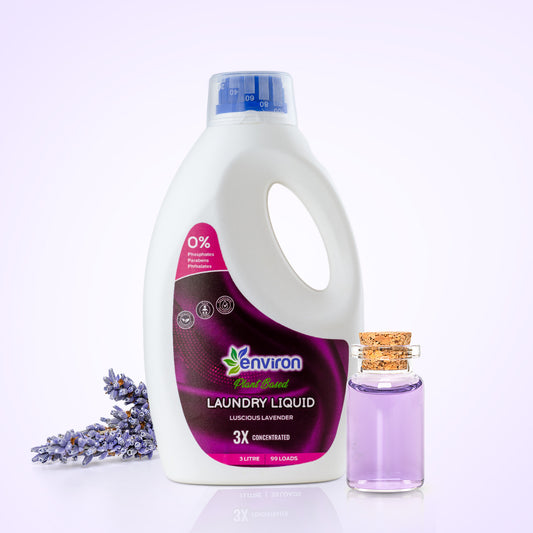
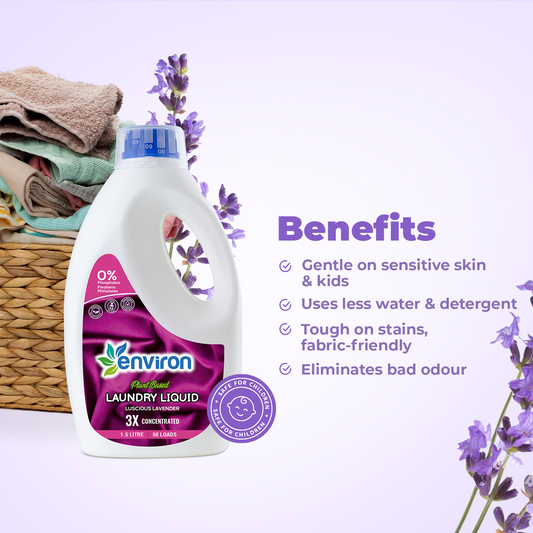
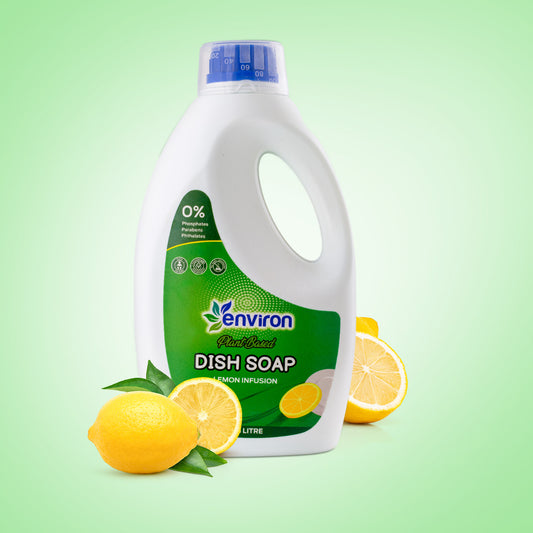
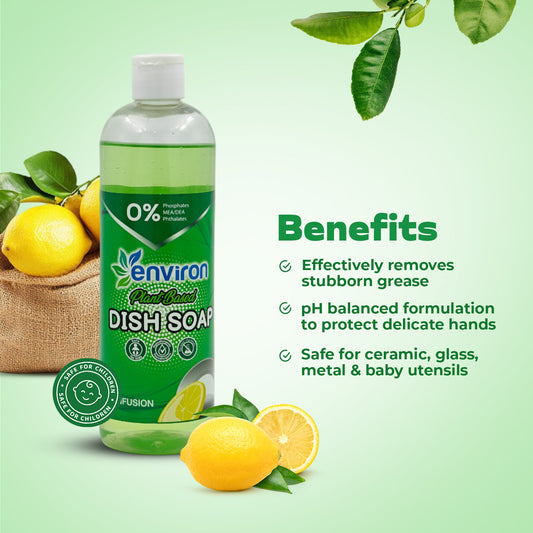
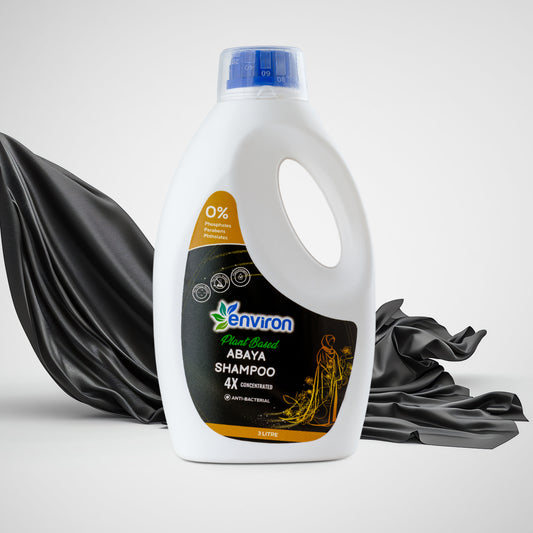
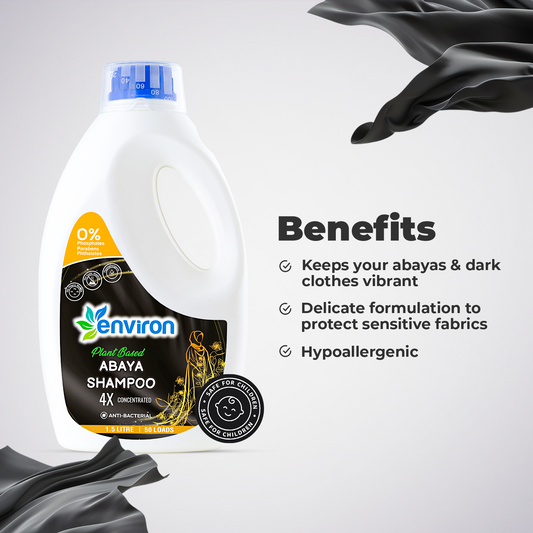
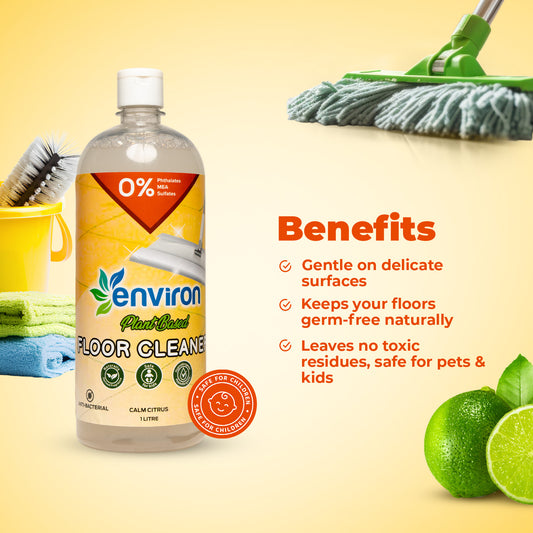
Environ's range includes Plant-Based Floor Cleaner, Laundry Liquid, Dishwashing Liquid, All-Purpose Cleaner, Toilet & Sink Cleaner, Hand Wash, Fabric Conditioner and Abaya Shampoo. The Floor Cleaner is described as 8X concentrated, and the Laundry Liquid is available in a fragrance-free option.
Environ also has GreenPro, IFRA and WHO GMP certifications in connection with its product or quality credentials.
Ultimately, choosing a cleaning product means considering its formulation, intended use and suitability for your household. Reading product labels and checking substantiated claims can help you make a more informed choice for your home.
A Cleaner Choice for a More Considered Home
For households with kids, pets or sensitive skin, plant-based cleaning products can offer an effective way to be more mindful about what becomes part of everyday home care.
The key is understanding what the formulation is designed to do, which ingredients it uses and where the product is intended to be used.
When you know what you are bringing into your home, choosing a cleaner becomes less about following a trend and more about making an informed choice for everyday family wellbeing.
References
-
Rai, S., Acharya-Siwakoti, E., Kafle, A., Devkota, H. P., & Bhattarai, A. (2021). Plant-Derived Saponins: A Review of Their Surfactant Properties and Applications. Sci, 3(4), 44. https://doi.org/10.3390/sci3040044
-
Salonen, H., Salthammer, T., Castagnoli, E., Täubel, M., & Morawska, L. (2024). Cleaning products: Their chemistry, effects on indoor air quality, and implications for human health. Environment International, 190, 108836. https://doi.org/10.1016/j.envint.2024.108836
-
Pandit, B., & Saha, P. (2025). Eco-friendly alternatives to conventional solvents: Innovations and applications in pharmaceutical manufacturing. Sustainable Chemistry for Climate Action, 100140. https://doi.org/10.1016/j.scca.2025.100140