
Quick Answer
To remove stubborn stains before machine washing, identify the stain, gently remove excess residue and pre-treat the affected area with a suitable laundry liquid or stain remover. Follow the product instructions and garment care label to choose the right method and water temperature. Wash as recommended and check whether the stain has disappeared before drying. For persistent marks, repeat the treatment if needed. Avoid excessive detergent or aggressive treatments that may affect fabric colour and texture over time.
A splash of karak on your shirt. Cooking oil on your favourite outfit. Sweat marks around the collar after a long day out. These everyday stains can be frustrating, especially when they remain even after a wash.
Putting stained clothes straight into the washing machine does not always remove the mark. Some stains need to be treated first and the right approach depends on what caused them and the fabric involved.
Here is how to tackle common stains before washing, when laundry liquid can help and what to consider when choosing a washing detergent.
Why Should You Treat Stains Before Machine Washing?
Different stains respond to different treatments. Oil, food, sweat and dirt do not all come out in the same way, so simply running a regular wash may not be enough.
The American Cleaning Institute recommends identifying the stain and treating it as early as possible. Pre-treating before washing can improve the chances of removal, while drying a garment before checking the stain may make the mark harder to remove.
How to Remove Different Types of Stains Before Washing
Before treating a stain, check the garment's care label. The cleaning method and water temperature should be suitable for the fabric.

1. Food and Beverage Stains
Tea, coffee, karak, juice and food spills can leave visible marks on everyday clothing.
-
Gently remove excess food or liquid without rubbing it into the fabric.
-
For many washable garments, rinse the stain with cool water.
-
Apply a suitable liquid detergent or stain remover if its instructions allow pre-treatment.
-
Wash according to the garment care label.
Fabric care tip: Treat the stain promptly. If it remains after washing, repeat the treatment before drying the garment. When treating stubborn stains, avoid repeatedly using strong stain treatments without checking whether they're suitable for the fabric. Over time, certain products and washing conditions can contribute to colour fading.
2. Oil and Grease Stains
Cooking oil and greasy food can cling to fabric and may need pre-treatment before the main wash.
-
Blot excess oil with a clean cloth or paper towel.
-
Avoid rubbing the stain across the fabric.
-
Apply a suitable liquid laundry detergent or stain remover according to its directions.
-
Wash using the warmest water permitted by the garment care label.
Fabric care tip: Older or heavier grease stains may need more than one treatment. When dealing with stubborn grease stains, repeated applications of strong cleaning products may be unnecessary. Follow the recommended dosage and choose a treatment suited to the fabric to help preserve its colour and texture over time.
3. Sweat and Deodorant Marks
Collars, cuffs and underarms can develop marks from perspiration and deodorant. These marks may build up over repeated wear and washing.
-
Apply a suitable laundry detergent or stain treatment to the affected area, following the product directions.
-
Allow the product to work for the recommended time, if specified.
-
Wash according to the garment care label.
-
Check the affected area after washing and repeat the treatment if necessary.
Fabric care tip: Persistent marks don't always require more detergent or a stronger treatment. Following the recommended dosage and choosing a product suited to your fabric can help avoid unnecessary wear over repeated washes.
4. Mud and Dust Stains
Dust and dirt can settle into clothing during everyday activities. Wet mud can spread if you rub it while trying to clean it.
-
If the stain contains heavy mud, allow it to dry first, provided this is suitable for the fabric.
-
Gently brush off the dried dirt without damaging the material.
-
Apply a suitable laundry detergent or stain remover to the remaining mark according to its instructions.
-
Wash as directed on the garment care label.
Fabric care tip: Remove as much loose dirt as possible before washing to help prevent it from spreading to other areas of the garment.
5. Ink Stains
Ink from pens can leave noticeable marks on shirts, trousers and other everyday clothing. The right treatment depends on the type of ink and fabric.
-
Blot fresh ink gently with a clean cloth to absorb excess ink. Avoid rubbing or spreading it.
-
Check the garment care label and the stain remover's instructions before applying any product.
-
Use a stain treatment specifically suitable for the ink and fabric, following its directions.
-
Wash according to the garment care label and check whether the stain has lifted before drying.
Fabric care tip: Avoid applying heat or putting the garment in the dryer while the stain remains, as this can make removal more difficult.
A Simple Pre-Wash Routine for Stubborn Stains
You do not need a complicated process every time a stain appears. Follow these steps before starting your washing machine.
-
Identify the stain. Knowing whether it is oil, food, blood or dirt helps you choose the right treatment.
-
Remove excess residue. Lift off solid material and blot liquid stains instead of rubbing them.
-
Check the fabric label. Confirm that the garment can be machine-washed and note any temperature restrictions.
-
Pre-treat the affected area. Use a suitable stain remover or laundry liquid if its label permits direct application to fabric. Test on an inconspicuous area first if needed.
-
Follow the recommended contact time. Leaving a product on for longer than instructed does not necessarily improve the result.
-
Wash and inspect. Use the correct detergent dose and washing cycle. Check the stain before drying and repeat treatment if it remains.
One important reminder: Never mix stain removers, bleach or other cleaning products unless their labels explicitly confirm that they can be used together.
Can Laundry Liquid Remove Stains?
Yes, laundry liquid can help remove many everyday stains, including some food spills, greasy marks, sweat and dirt. Certain liquid detergents can also be used to pre-treat stains before the main wash.
However, the result depends on the stain, how long it has been there, the fabric and the detergent's formulation. A fresh mark may respond well to pre-treatment, while an old or stubborn stain may need a specialist stain remover or repeated treatment.
Check the product label before applying washing liquid directly to clothes. Not every detergent is designed for pre-treatment and delicate fabrics may require a different approach.
Can You Use Laundry Liquid for Bucket Washing and Handwashing Clothes?
Yes, provided the washing liquid is labelled as suitable for handwashing. Some products are designed primarily for machine washing, so check the instructions before using them in a bucket.
If the product is suitable for handwashing, measure the recommended amount and dilute it thoroughly in water before adding the clothes. Gently move the garments through the water without twisting or scrubbing delicate fibres too aggressively. Rinse thoroughly according to the product directions and garment care label.
Avoid using extra detergent simply because the clothes look dirty. More product does not automatically mean cleaner clothes and can make rinsing more difficult.
Is Liquid Detergent More Effective Than Powder Detergent?
Both liquid and powder detergents can clean clothes effectively. Neither format is automatically better for every stain or every wash.
Liquid detergent can be convenient for pre-treating certain stains, particularly greasy or oily marks, when the product instructions allow direct application. Powder detergent can also be suitable for everyday laundry and heavily soiled loads, depending on its formulation and the washing conditions.
When choosing a laundry detergent, consider the types of stains you encounter, the fabrics you wash and the product's recommended use. Following the correct dosage and washing instructions matters just as much as choosing the detergent format.
The same principle applies to plant-based laundry products. Plant-based describes an aspect of a product's formulation. It does not guarantee that the product will remove every stain or outperform every other detergent.
Does Fabric Conditioner Help Remove Stains?
No. Fabric conditioner, also called fabric softener, serves a different purpose from laundry detergent. It is generally used during the rinse cycle to improve fabric feel and reduce static, depending on the formulation.
It does not replace detergent or a dedicated stain treatment. Avoid pouring fabric conditioner directly onto a stain unless the product instructions specifically permit it, as concentrated conditioner can leave marks on some fabrics.
For stubborn stains, focus on pre-treating the affected area with a suitable detergent or stain remover. Use fabric conditioner only as directed during the wash.
What Should You Look for When Choosing a Laundry Liquid?
A good laundry liquid should do more than remove dirt and stains. It should clean effectively while helping maintain your clothes' colour, texture and appearance over time. Following the recommended dosage and avoiding repeated aggressive stain treatments can also help you care for your fabrics.
But fabric care is only one part of the picture. Since your clothes stay in contact with your skin for hours, it's worth paying attention to what your laundry liquid leaves behind. A review published in Skinmed explored how detergent residues on fabrics may irritate susceptible individuals. If you have sensitive skin, checking the ingredient list and considering hypoallergenic formulations may help you make a more informed choice.
This is where the ingredients themselves become worth a closer look. Plant-based laundry liquids use plant-derived ingredients for some of their cleaning functions. While the plant-based label alone doesn't guarantee better performance or gentleness, understanding the complete formulation helps you look beyond the label.
So, what should you look for? Start with effective cleaning, clear ingredient information and instructions that suit your laundry routine. A well-considered formulation should meet your everyday cleaning needs while taking both fabric care and your household's preferences into account.
How Does Environ Approach Everyday Laundry Care?
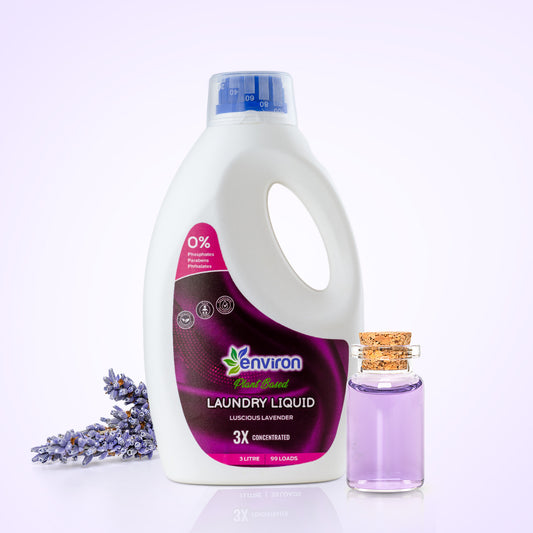
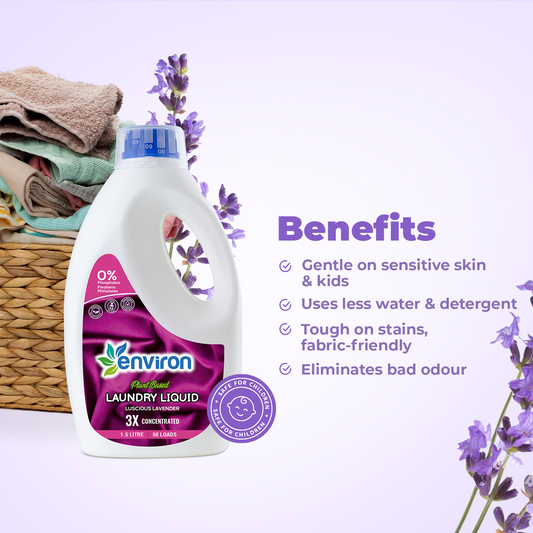
Keeping these considerations in mind, Environ Plant-Based Laundry Liquid brings together plant-based surfactants and a bio-enzyme blend to support everyday cleaning and stain removal. Its formulation also includes purified water and essential oils, offering a plant-based approach to regular fabric care.
For health-conscious households, Environ has developed a hypoallergenic and non-toxic formulation that brings together effective cleaning and a skin-conscious approach to everyday laundry care. It is formulated without phthalates, parabens, bleach, ammonia, chlorine, formaldehyde, optical brighteners, dyes or synthetic fragrances. For households that prefer to avoid added synthetic fragrance, it is available in Scent-Free and Lavender variants.
Once your clothes are clean, you can add another step to your fabric-care routine with Environ Plant Based Fabric Conditioner. While the laundry liquid tackles everyday dirt and stains, the conditioner helps maintain fabric softness and care for the feel and appearance of your clothes over time.
For families exploring plant-based laundry care, understanding the formulation and choosing products that fit their everyday needs are practical starting points.
Make Every Wash Count for Your Clothes
A stubborn stain can make you reach for a stronger product or add a little extra detergent. But sometimes, better laundry care starts with knowing what a stain needs and giving it the right treatment.
The way you wash your clothes matters just as much as how you tackle the mark. With the right pre-wash routine, suitable products and a little attention to fabric care, you can work towards cleaner clothes without putting unnecessary strain on the fabrics you wear every day.
References:
-
American Cleaning Institute. Stain removal guide. https://www.cleaninginstitute.org/cleaning-tips/clothes/stain-removal-guide
-
Crawford, C., & Zirwas, M. J. (2014). Laundry detergents and skin irritancy--a comprehensive review. Skinmed, 12(1), 23–31.