
Quick Answer
Hands can turn red after washing dishes because of repeated contact with water, dishwashing products and friction. This may lead to irritant contact dermatitis. In some cases, a particular ingredient can trigger allergic contact dermatitis. The two conditions can look similar, so recurring redness, itching or discomfort should be assessed by a dermatologist.
The dishes are done, the kitchen sink is empty and everything is ready for the next meal. But there is one thing you might notice after washing up: your hands look red, feel tight or seem unusually dry.
You might think you have been washing dishes for too long. Or perhaps you assume your skin is simply sensitive.
But could something in your everyday dishwashing routine be contributing to the discomfort?
Redness after washing dishes can have different causes. Repeated exposure to water and cleaning products may irritate the skin, while certain ingredients can trigger an allergic reaction in susceptible individuals.
Understanding the difference can help you make more informed choices about your dishwashing habits and the products you use.
Why Do Hands Turn Red After Washing Dishes?
Two possible causes of redness after contact with cleaning products are irritant contact dermatitis and allergic contact dermatitis. Although they can produce similar symptoms, they happen in different ways.
1. Irritant Contact Dermatitis: When Repeated Exposure Affects the Skin
Your skin has a protective outer layer that helps retain moisture and protect it from external irritants. Frequent exposure to water, soaps and detergents can affect this barrier, particularly when the exposure happens repeatedly.
Think about what your hands go through while washing dishes. They are repeatedly wet, exposed to cleansing ingredients, rubbed against sponges and then dried. This combination of wetting, drying and friction can contribute to skin irritation.
You may notice:
-
Redness
-
Dryness or rough patches
-
A tight or burning sensation
-
Itching or flaking
-
Cracks in more affected areas
People who already have dry or damaged skin may be more vulnerable to irritation.
The NHS identifies regular contact with water, soaps and detergents as common triggers of irritant contact dermatitis.
2. Allergic Contact Dermatitis: When a Particular Ingredient Triggers a Reaction
Sometimes, the issue is not simply repeated exposure. It may be an allergic response to a particular ingredient.
This is known as allergic contact dermatitis.
Certain fragrance components, preservatives and other ingredients can trigger an allergic response in susceptible individuals. Symptoms may include redness, itching, swelling and, in some cases, small blisters.
Unlike irritation, an allergic reaction may not appear immediately. According to the NHS, symptoms can develop hours or even days after contact with the substance responsible.
What is the difference?
- Irritant contact dermatitis: The skin is directly affected by repeated exposure to irritating substances.
- Allergic contact dermatitis: The immune system reacts to a particular substance that the person has become sensitised to.
Redness alone cannot tell you which condition you have. A dermatologist can assess recurring symptoms and may recommend patch testing if an allergy is suspected.
How Can You Tell If Your Dish Soap Is a Possible Trigger?
If you experience redness in your hands regularly after washing utensils, it is reasonable to look at your dishwashing routine. But how do you know whether the dish soap is actually involved?
Start by paying attention to patterns rather than immediately assuming that one product is responsible.
Here are a few things to observe:
-
When does the redness appear? Does it begin while washing dishes, shortly afterwards or much later?
-
Does it happen repeatedly? Notice whether the reaction occurs after most dishwashing sessions or only occasionally.
-
Did it begin after changing products? A new product may be worth considering, particularly if the timing coincides with the appearance of symptoms.
-
Does it happen with other cleaning products? If you experience similar discomfort during other cleaning tasks, the issue may involve broader exposure rather than one dish soap.
-
Does the discomfort continue when you are not washing dishes? Persistent symptoms may point to a skin problem that needs assessment beyond your dishwashing routine.
These observations can help you explain the pattern to a dermatologist. They cannot confirm an allergy or identify a specific ingredient on their own.
If the redness keeps returning, avoid repeatedly switching products in the hope of finding an answer. Understanding the cause is more useful than guessing.
What Should You Understand About Dish Soap Ingredients?
Dishwashing liquids contain different ingredients that work together to remove grease and food residues. Their purpose and formulation matter, particularly when you are thinking about repeated contact with cleaning products.
Here are three ingredient categories worth understanding:
| Ingredient category | What you should know |
|---|---|
| Surfactants | Help loosen grease and food residues so they can be rinsed away. Their properties and concentration influence how they interact with the skin. |
| Fragrance components | Add scent to a product. Certain fragrance ingredients can trigger allergic reactions in susceptible individuals. |
| Preservatives and other ingredients | Serve different purposes within a formulation. Individual sensitivities can vary, so the complete ingredient information is more useful than judging a product by one component alone. |
Surfactants, for example, are essential to effective dishwashing. However, different surfactants do not interact with the skin in the same way. Research published in the European Journal of Dermatology has explored how surfactant properties can influence the skin barrier.
This is why it is not useful to label all cleansing ingredients as either good or bad. The overall formulation, concentration and the way a product is used all matter.
Plant-derived ingredients can also perform useful cleaning functions. But plant-based does not automatically mean irritation-free or suitable for every individual.
How Can You Reduce Skin Irritation While Washing Utensils?
You do not necessarily need to avoid everyday dishwashing if your hands occasionally feel dry or uncomfortable. A few practical changes may help reduce unnecessary exposure and friction.
1. Follow the Recommended Amount
Adding extra dish soap does not automatically make utensils cleaner. Follow the product's recommended quantity and dilution instructions. Using it as directed helps ensure the formulation is used as intended.
2. Avoid Unnecessarily Hot Water
You do not need very hot water for every dishwashing task. If your hands already feel dry or irritated, comfortably warm or lukewarm water may be a more comfortable choice.
3. Use a Suitable Sponge or Cleaning Tool
Let the sponge do the scrubbing. Repeated friction and excessive pressure can add to discomfort, especially if your skin is already irritated.
4. Rinse and Dry Your Hands Afterwards
Once you finish washing the utensils, rinse your hands with clean water and pat them dry. Avoid rubbing irritated areas.
If your skin feels dry, applying a suitable moisturiser afterwards can help support its protective barrier.
5. Consider Wearing Gloves
If direct contact with water and dishwashing products causes discomfort, suitable waterproof gloves can help reduce exposure.
Choose gloves that fit properly and make sure they remain dry inside. If you notice that the gloves themselves cause itching or redness, stop using them and seek advice about a suitable alternative.
How to Choose a Dish Soap If You Experience Redness After Washing Utensils
If your hands often become red or uncomfortable after washing dishes, here are a few things to consider when choosing your dish soap:
1. Look for thoughtfully selected ingredients
Pay attention to the ingredients used in the formulation of dishwashing liquid. Plant-based and plant-derived cleansing ingredients are one option to consider when exploring different dishwashing formulations.
2. Understand the complete formulation
Don't judge a dish soap by a single ingredient or label. The overall formulation, including the type and concentration of its cleansing ingredients, matters.
3. Check the fragrance information
If you have known sensitivities to certain fragrance ingredients, check the product information before choosing a dish soap. This helps you make a more informed decision.
4. Follow the recommended usage instructions
Use the recommended quantity and dilution and rinse utensils thoroughly. If direct contact makes your hands uncomfortable, consider wearing suitable gloves.
5. Choose a product that meets your everyday cleaning needs
A dish soap should effectively remove grease and food residue while fitting into your household's everyday cleaning routine. Plant-based formulations offer an alternative to consider but no formulation can guarantee that everyone will respond to it in the same way.
A More Considered Choice for Everyday Dishwashing
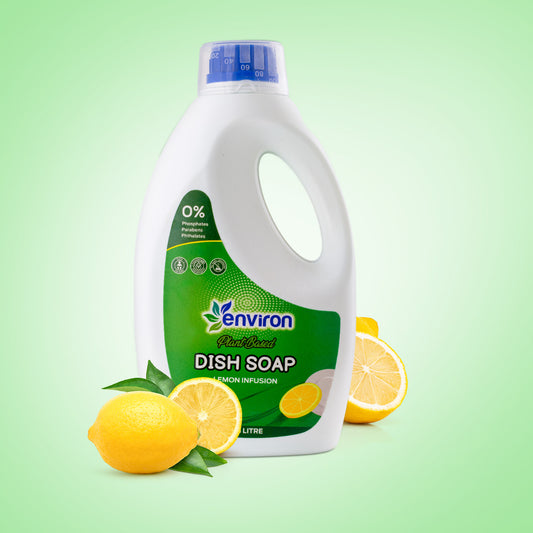
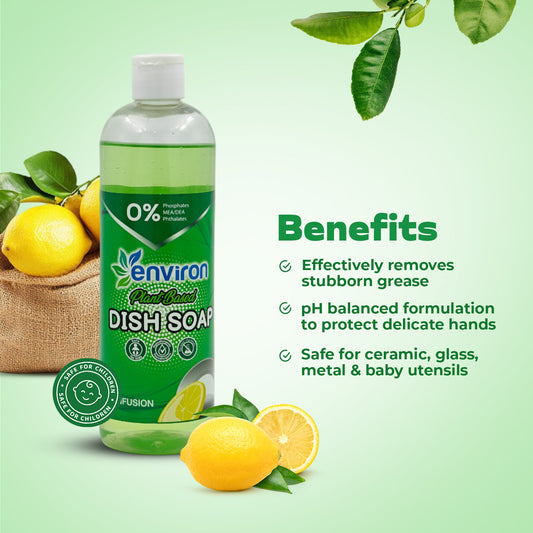
For everyday kitchen cleaning, Environ Plant-Based Dish Soap brings together effective grease removal and a thoughtfully selected plant-based formulation. Made with plant-based surfactants, enzymes, essential oils and purified water, it is designed to tackle everyday food residue and grease while making plant-based cleaning part of your kitchen routine.
Its hypoallergenic formulation is suitable for sensitive skin, making it an option worth considering for households mindful of skin comfort during everyday cleaning. It is also suitable for a variety of utensils, including ceramic, stainless steel, silicone, plastic, brass, copper and wooden utensils, as well as baby feeding bottles.
With Environ, everyday dishwashing is about more than clean utensils. It is about making a considered choice for the products you bring into your home.
When Should You See a Dermatologist?
Occasional dryness after washing dishes may improve with changes to your routine. However, recurring redness should not be ignored.
Consider consulting a dermatologist if you notice:
- Redness that keeps returning
- Persistent itching or burning
- Swelling or small blisters
- Cracked or painful skin
- Symptoms that continue even when you are not washing dishes
A dermatologist can help determine whether the problem is irritant contact dermatitis, an allergic reaction or another skin condition. If an allergy is suspected, patch testing may help identify the responsible substance.
Rather than repeatedly changing cleaning products or trying to diagnose the problem yourself, getting the right assessment can help you understand what your skin needs.
A Cleaner Kitchen and a More Thoughtful Routine
Washing utensils is an everyday task but repeated contact with water, cleaning products and friction can sometimes leave your hands with redness and a feeling of discomfort.
The first step is to understand what may be happening. Irritation and allergic reactions are different and redness alone cannot identify the cause.
Pay attention to recurring patterns, follow product instructions, reduce unnecessary friction and check ingredient information when choosing your dish soap. If symptoms persist, seek professional advice.
Because looking after your kitchen is part of everyday home care and making informed choices about your cleaning routine matters too.
References
-
National Health Service (NHS). Contact dermatitis.
-
Lemery, E., Briançon, S., Chevalier, Y., Oddos, T., Gohier, A., Boyron, O., & Bolzinger, M. A. (2015). Surfactants have multi-fold effects on skin barrier function. European Journal of Dermatology, 25(5), 424–435. https://doi.org/10.1684/ejd.2015.2587