
Quick Answer
Rashes after wearing washed clothes can have several causes, including heat, eczema, fabric friction or laundry habits. If the problem repeatedly appears after wash day, reviewing your washing liquid for clothes, detergent dosage and rinsing routine may help identify possible factors.
Your child wore the same cotton T-shirt yesterday without any discomfort. Today, after it has been washed, they start scratching their neck, arms or waist within an hour of wearing it.
As a parent, it's natural to wonder what changed.
Was it the weather? The fabric? A food allergy? Or could it be the washing liquid for clothes you used?
The answer is rarely straightforward. Children's skin is delicate and rashes can have several causes, including heat, eczema, sweat, friction, pollen and even the way clothes are washed. While a laundry detergent is not always the culprit, your laundry routine deserves attention if skin irritation appears repeatedly after wash day.
Understanding why this happens can help you make practical changes that support your child's skin without replacing every product in your home.
Your Child's Skin Is More Sensitive Than You Think
A child's skin is different from an adult's. It has a thinner protective layer, loses moisture more quickly and is still developing its natural barrier. This makes it more vulnerable to everyday irritants.
Think of your child's skin as a brick wall. Skin cells are the bricks, while natural oils act as the cement holding them together. When this barrier weakens, moisture escapes more easily and irritants can enter the skin.
For children with eczema-prone or sensitive skin, even common factors such as sweat, rough fabrics or detergent residue may contribute to discomfort. This doesn't mean parents should fear doing laundry. It simply means laundry habits deserve as much attention as skincare routines.
Not Every Rash Is an Allergy
One of the biggest misconceptions among parents is that every rash is an allergic reaction.
Several skin conditions can look similar. Heat rash develops when sweat becomes trapped under the skin. Contact dermatitis occurs when the skin reacts to an irritant such as a rough clothing label, synthetic fabric or in some cases, substances left behind on clothing after washing. Children with eczema often experience flare-ups because their skin barrier already struggles to retain moisture.
Instead of assuming one cause, doctors usually look for patterns.
-
Does the rash appear only after wearing freshly washed clothes?
-
Does it improve after changing laundry habits?
-
Does it occur only with certain fabrics?
The answers often provide valuable clues.
What Can Affect Rinsing During a Wash?
Using too much liquid detergent, overloading the washing machine or choosing a wash program that doesn't rinse thoroughly may make it harder to remove laundry product residue from fabrics.
Clothes can still smell fresh and look clean even if some residue remains.
What Does Research Say About Laundry Detergent and the Skin Barrier?
A 2024 study indexed in PubMed investigated how household laundry detergents may affect the skin barrier. Researchers tested detergent exposure on mouse skin and ex vivo human skin and found changes linked to reduced skin-barrier integrity and inflammation in their experimental models.
The human skin model also showed a significant reduction in barrier integrity following detergent exposure.
However, this does not mean laundry detergent causes rashes in every child. The study examined detergent exposure under controlled experimental conditions and did not test children wearing normally washed clothes in everyday life.
The research does, however, help explain why scientists continue to investigate the relationship between detergent exposure and skin-barrier health.
The practical takeaway for parents is simple: if your child's discomfort repeatedly appears after wearing freshly washed clothes, reviewing detergent dosage, rinsing and the wider laundry routine may be a sensible place to start.
6 Laundry Habits to Review If Your Child Gets Rashes After Wash Day
Sometimes the problem is not the detergent itself but how laundry is being done.
1. Using Too Much Detergent
More washing detergent or liquid for clothes does not mean cleaner laundry. Excess detergent can become harder to rinse away, especially during shorter wash cycles.
2. Overloading the Washing Machine
A tightly packed drum prevents clothes from moving freely, reducing both cleaning and rinsing efficiency.
3. Skipping an Extra Rinse
If your child has sensitive skin, an additional rinse cycle may help remove leftover detergent from clothing.
4. Using Too Much Fabric Conditioner
A fabric conditioner is designed to remain on clothes after washing. Using the recommended amount is important because more product does not necessarily mean softer clothes.
5. Forgetting the Washing Machine
Your washing machine also needs regular cleaning. Detergent residue, fabric fibres, body oils and moisture can build up inside the drum, detergent drawer and rubber seal over time. Running a maintenance cycle every month, cleaning the detergent drawer and leaving the door slightly open after each wash helps maintain better laundry hygiene.
6. Not Washing New Clothes Before First Wear
New clothes may carry manufacturing residues, dust or fabric finishes. Washing them before your child wears them for the first time may help remove substances left on the fabric.
Choosing Plant-Based Laundry Products for Everyday Family Care
When reviewing your laundry products, look beyond fragrance and bold marketing claims. Check the formulation, usage instructions and how your child's skin responds.
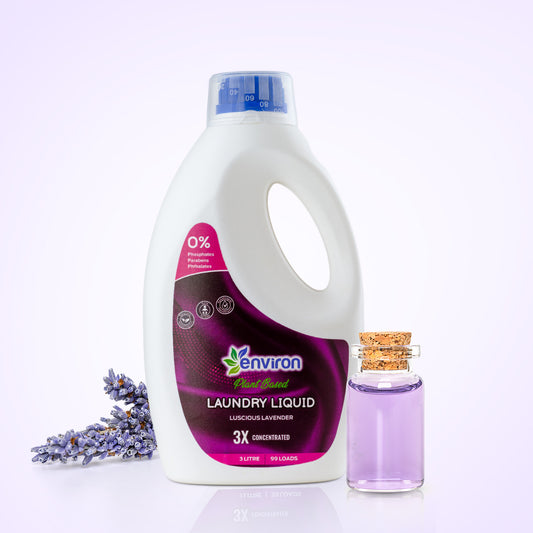
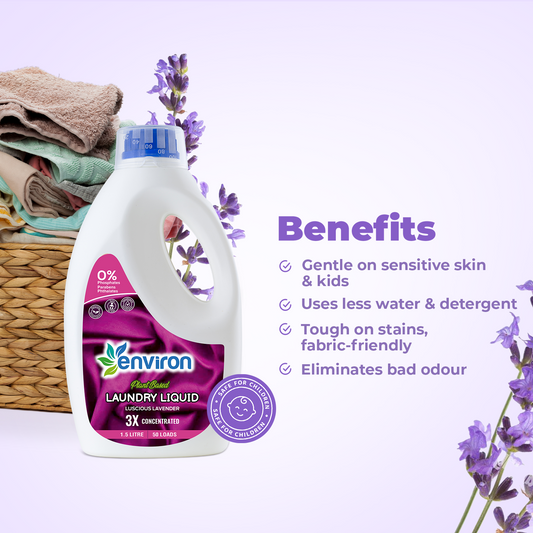
Environ's Plant-Based Laundry Liquid is made with thoughtfully selected plant-based ingredients for effective everyday fabric cleaning. Its formulation is free from phthalates, parabens, bleach, acids, chlorine, formaldehyde, VOCs, heavy metals, optical brighteners, dyes and toxic synthetic fragrances.
For families reviewing their everyday laundry routine, choosing thoughtfully formulated products and following the recommended dosage can be a practical place to start.
Explore Environ's range of plant-based laundry and home cleaning products.
The Bottom Line
A rash after wearing freshly washed clothes does not automatically mean your child's washing liquid for clothes is responsible. Children's skin is influenced by many factors, including heat, sweat, eczema, fabrics and environmental exposure.
However, reviewing your laundry habits, keeping your washing machine clean, following the correct detergent dosage and choosing thoughtfully formulated products can help create a routine that supports both clean clothes and everyday comfort.
Sometimes the best way to protect your child's skin is not by doing more. It's by doing the simple things right.
Frequently Asked Questions
Can a washing liquid for clothes cause skin rashes in children?
Not always. Rashes can have many causes including eczema, heat, friction and allergies. Laundry products may be one contributing factor for some children.
Can detergent residue stay on clothes after washing?
Small amounts of laundry product residue may remain on fabrics when too much detergent is used or rinsing is less effective. Following the recommended dosage and ensuring clothes are rinsed properly may help.
Should I wash my child's new clothes before they wear them?
Yes. Washing new clothes before first use helps remove manufacturing residues, dust and other particles that may remain on the fabric.
How often should I clean my washing machine?
Running a maintenance cycle about once a month and cleaning the detergent drawer and rubber seal regularly helps maintain good laundry hygiene.
What should I do if my child's rash keeps returning after wash day?
Review recent changes to your laundry products, detergent dosage and rinse routine. If the rash persists, worsens or repeatedly returns, speak with a healthcare professional or dermatologist to help identify the possible cause.
Which Environ products can support a complete family laundry routine?
Environ offers Plant-Based Laundry Liquid for effective everyday fabric cleaning and Plant-Based Fabric Conditioner to help keep clothes soft, fresh and comfortable as part of a complete plant-based laundry routine.