
Quick Answer
Freshly washed clothes can still irritate sensitive skin because discomfort is not always caused by dirt or visible stains. Factors such as detergent residue, fabric friction, trapped moisture and a weakened skin barrier can all contribute to irritation, even when clothes appear perfectly clean.
Freshly washed clothes should feel like the safest thing to wear.
They smell fresh. They look spotless. They feel clean the moment you take them out of the wardrobe.
So why do some people find themselves scratching their neck after a few hours? Or why does a child sometimes come home from school with itchy skin despite wearing freshly washed clothes?
The answer isn't always an allergy and it isn't always the laundry detergent.
Sometimes, it is the way your skin responds to the clothes you wear every day.
Every morning, your skin begins a conversation with the fabric you wear. That conversation continues throughout the day as you walk outdoors, move between air-conditioned spaces, commute to work, exercise or simply go about your routine. Heat builds up, moisture changes, fabrics move against your skin and your clothing responds differently depending on how it has been washed and cared for.
Clean clothes are only the beginning. Comfortable clothes are the real goal.
Why Clean Clothes Can Still Feel Uncomfortable
Most of us judge freshly washed clothes in three ways.
-
Do they smell fresh?
-
Do they look clean?
-
Do they feel soft?
Dermatologists ask a different question.
How does the fabric interact with your skin after you start wearing it?
Comfort depends on more than appearance. Fabric type, moisture retention, movement against the skin and how thoroughly clothes have been rinsed all influence how they feel throughout the day.
Natural fibres gradually lose softness after repeated washing. Synthetic fabrics respond differently depending on temperature, detergent dosage and the way they are dried. Over time, these small changes influence how clothes feel against your skin.
This is particularly relevant in warm climates where clothes are washed frequently because of perspiration. Laundry products and habits become part of your everyday environment, making thoughtful choices more important.
The Hidden Impact of Laundry Detergent on Sensitive Skin
When buying a washing detergent, most people focus on stain removal, fragrance or whitening performance.
Your skin has different priorities.
It responds to how rough a fabric feels, how much moisture it holds and how easily it moves across the skin.
This is one reason dermatologists pay close attention to the skin barrier. Research published in the National Library of Medicine suggests that eczema-prone skin loses moisture more easily through the outer layer of the skin and the trigger for that can be detergents among other allergens. A weaker skin barrier makes everyday experiences such as friction, trapped sweat or rough fabrics feel far more noticeable than they do for someone with healthy skin.
That is why two people can wear the same freshly washed shirt and have completely different experiences.
If you, your child or someone in your family frequently experiences unexplained redness, itching, rashes or lives with eczema, it may be worth looking beyond your skincare routine alone. While genetics, environmental allergens and existing skin conditions all play an important role, everyday household products, including your laundry detergent, fabric conditioner and other cleaning products, can also influence how comfortable your skin feels.
Sometimes, rethinking the products you use every day can be one small but meaningful step towards supporting healthier skin.
Why More Families Are Looking Beyond Conventional Detergents
Not all detergents are formulated the same way. Many conventional laundry detergents contain synthetic surfactants, artificial fragrances, dyes and preservatives that deliver powerful stain removal and long-lasting fragrance. While these products work well for many households, repeated exposure to these ingredients may compromise the skin's natural barrier and contribute to irritation in people with sensitive skin.
In Qatar, where clothes are frequently washed due to the hot climate and worn for long hours in air-conditioned environments, this becomes even more important. That is why many families are turning to plant-based laundry detergents, which use cleaning agents derived from enzymes and renewable plant sources along with thoughtfully selected ingredients. While no detergent can eliminate skin irritation, choosing a plant-based formulation can be a more considered approach for families looking to clean their clothes effectively without relying on unnecessarily harsh chemicals.
Choosing the Right Laundry Detergent for Sensitive Skin
If your laundry routine is contributing to skin discomfort, it may be time to look beyond how well your clothes are cleaned and consider what is left behind after every wash. Laundry products made with thoughtfully selected ingredients can help reduce unnecessary exposure to harsh chemicals while supporting cleaner fabrics and everyday skin comfort.
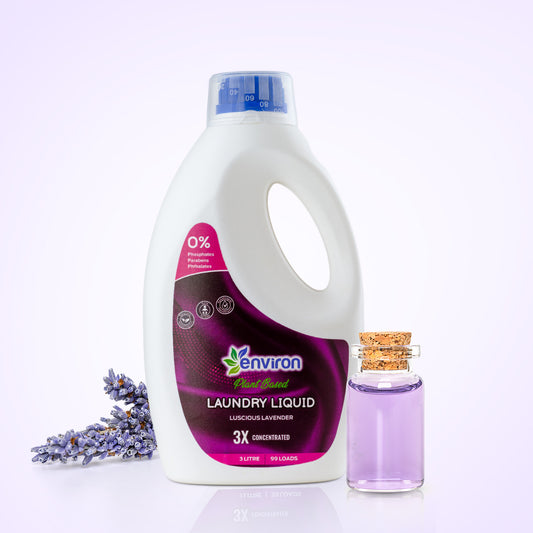
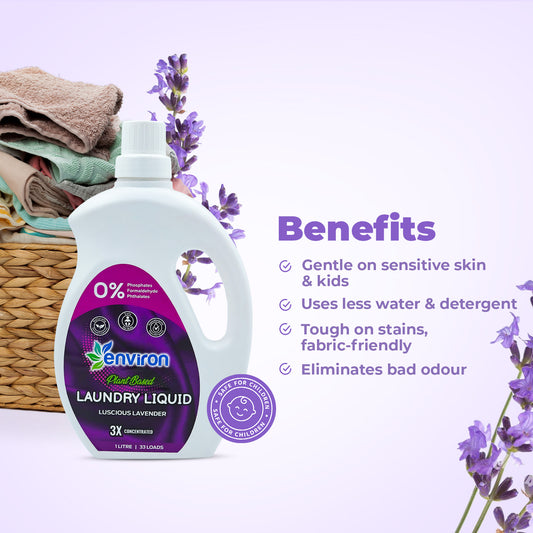
That is the philosophy behind Environ Plant-Based Laundry Liquid. Made with plant-derived cleaning agents, it is formulated to clean fabrics effectively while rinsing clean, helping minimise detergent residue that may remain on fabrics after the rinse cycle. Instead of relying on unnecessarily harsh ingredients, Environ focuses on effective cleaning through carefully selected plant-based formulations that are kinder to fabrics and more suitable for everyday family use.
To complete the routine, Environ Plant-Based Fabric Conditioner helps keep clothes soft, fresh and comfortable through repeated washing. Together, they provide a complete plant-based laundry solution designed for families who want effective cleaning, thoughtful ingredients and greater peace of mind with every wash.
Why Your Laundry Detergent Matters Every Day
The next time you fold your laundry, remember that clean clothes are only part of the story.
The products you use every week become part of your family's everyday environment. They stay close to your skin for hours, wash after wash and day after day.
Choosing a laundry detergent is not just about removing stains. It is about choosing what stays closest to your family's skin every single day. It is also about choosing ingredients you trust, supporting your skin barrier
Because true cleanliness is not just what you see on your clothes. It is what you no longer have to worry about.
Frequently Asked Questions
Why do freshly washed clothes sometimes make my skin itch?
Freshly washed clothes may feel uncomfortable because of factors such as fabric friction, trapped sweat, detergent dosage, washing habits or individual skin sensitivity.
Can using too much laundry detergent affect skin comfort?
Yes. Using more detergent than recommended may make it harder for fabrics to rinse thoroughly, especially in overloaded washing machines.
Does fabric type affect sensitive skin?
Yes. Different fabrics manage heat, moisture and friction differently, which can influence how comfortable they feel against sensitive skin.
Why is fabric conditioner important?
A fabric softener or laundry conditioner helps care for fabrics, maintaining softness and comfort through repeated washing as directed.
How often should I clean my washing machine?
Running a maintenance cycle once a month and cleaning the detergent drawer and rubber seal regularly helps maintain better laundry hygiene and washing performance.
Which Environ products are recommended for everyday laundry?
Environ offers Plant-Based Laundry Liquid for effective everyday fabric cleaning and Plant-Based Fabric Conditioner to help keep clothes soft, fresh and comfortable while supporting fabric care.