
Quick Answer
A baby bottle that looks clean may not always be completely clean. Small amounts of detergent residue can potentially remain on baby bottles and feeding utensils, which may come into contact with food or milk, particularly when conventional dishwashing liquids are used excessively or when rinsing is not thorough. This is why some parents are choosing plant-based dishwashing liquids made with carefully selected ingredients for everyday cleaning. However, using the recommended amount and rinsing thoroughly remain essential, regardless of the formulation.
Is a Bottle Really Clean Just Because It Looks Clean?
When parents think about bottle hygiene, the first thing they usually check is whether all the milk residue is gone.
But visible cleanliness and cleaning-product residue are two different things.
A bottle may appear perfectly clean, yet traces of detergent can still be left behind when too much product is used or rinsing is incomplete.
That is why bottle hygiene is not only about removing what you can see. It is also about making sure the cleaning process itself does not leave something behind.
Parents carefully consider the bottle, formula and feeding accessories they use every day. Yet the dishwashing liquid used to clean those items can receive far less attention, even though it becomes part of the same feeding routine several times a day.
For families in Qatar, where baby feeding bottles, sippy cups and feeding accessories are washed repeatedly throughout the day, this is an important part of everyday kitchen hygiene that deserves more consideration.
Visible Cleanliness Is Different From Chemical Cleanliness
A bottle can be free from milk residue and still contain traces of the product used to clean it.
That distinction is rarely discussed.
Parents naturally focus on visible cleanliness because milk stains are easy to see. Detergent residue is different. It is usually invisible, making it much easier to overlook.
Think about it this way.
|
What Parents Usually Check |
What Often Gets Missed |
|
Milk residue |
Detergent residue |
|
Bottle sterilisation |
Thorough rinsing |
|
BPA-free bottles |
Ingredients in the dishwashing liquid |
|
Formula quality |
Cleaning product choice |
This does not mean every bottle contains detergent residue.
It simply means that a bottle looking clean does not automatically mean every part of the cleaning process has been completed.
Does More Foam Mean a Cleaner Bottle?
One of the most common cleaning habits is using extra dish soap for bottles that held formula or fatty milk.
It feels logical.
More foam should mean better cleaning.
In reality, foam is not a measure of cleaning performance.
The job of a dishwashing liquid comes from ingredients called surfactants. These molecules work by surrounding grease, milk fats and food particles so they can be lifted away with water.
Using more detergent than recommended does not necessarily remove more milk residue.
Instead, it can make bottles more difficult to rinse thoroughly because there is simply more cleaning solution that needs to be washed away.
The cleaner should do its job during washing.
It should not become part of the next feed.
Why Ingredient Choice Matters
Not all dishwashing liquids are formulated in the same way.
Many conventional products contain synthetic surfactants, artificial fragrances, dyes and preservatives that help remove grease and improve the appearance or scent of the product.
These ingredients are commonly used in household cleaners and most products can be used safely when used according to the manufacturer's directions.
However, infants are different from adults.

Research published on PubMed suggests that detergent residue left on utensils can come into contact with the skin or be ingested, potentially causing irritation or allergic reactions in adults. If such exposure can affect adults, it is understandable that parents may want to be particularly mindful of what comes into contact with infants, whose bodies are still developing.
Their skin barrier is still developing, their digestive system continues to mature during the early months of life and everything that comes into contact with their mouths deserves careful attention.
This is one reason organisations such as the CDC recommend washing baby feeding bottles carefully, rinsing them thoroughly under running water and allowing them to dry completely before the next feed.
Five Mistakes Parents Commonly Make When Cleaning Baby Bottles
Sometimes it is not the bottle that needs changing.
It is the cleaning routine.
1. Believing More Dish Soap Means Better Cleaning
Using extra detergent does not necessarily remove more milk residue. It often means there is more cleaning solution that needs to be rinsed away afterwards.
2. Focusing Only on Sterilising
Sterilising kills microorganisms, but it does not remove milk residue or detergent residue. Washing and rinsing properly should always come before sterilisation.
3. Ignoring Bottle Wear and Tear
Scratched bottles and worn bottle teats can become more difficult to clean thoroughly because tiny grooves may trap milk residue and make effective rinsing more challenging.
4. Reusing Dirty Bottle Brushes or Sponges
Cleaning tools also need regular cleaning and replacement. Otherwise, they may reduce the effectiveness of the entire bottle cleaning process.
5. Choosing a Dishwashing Liquid Without Reading the Label
Parents carefully compare formulas, bottles and baby skincare products, but many never look at the ingredients in the product used to wash feeding bottles every day.
Choosing a dishwashing liquid should involve the same level of consideration as choosing other products used during infant care.
Why More Parents Are Looking Beyond Conventional Dishwashing Liquids
Once parents understand that bottle hygiene is not just about removing milk residue, another question naturally follows.
If the cleaning product itself becomes part of the bottle cleaning process, should its ingredients matter too?
For many families, the answer is yes.

Parents already read the ingredients on infant formula, baby lotion and skincare products because they want to know what comes into contact with their baby every day. Increasingly, they are extending the same thinking to the detergents or dishwashing liquid they use to clean feeding bottles and utensils.
This shift is not driven by fear.
It is driven by awareness.
Conventional cleaners for kitchen are designed to cut through grease quickly, often using synthetic surfactants, artificial fragrances, dyes and other cleaning additives. These products can clean effectively. However, some families may prefer formulations with thoughtfully selected ingredients and fewer unnecessary additives as part of a more considered approach to everyday home care.
This growing awareness has encouraged more families to consider plant-based dishwashing liquids as part of a more thoughtful feeding routine.
Why Plant-Based Dishwashing Liquids Are Becoming the Preferred Choice
Conventional dishwashing liquids often rely on synthetic surfactants to break down grease, along with ingredients such as fragrances, dyes, preservatives and other formulation additives. Some formulations may also contain stronger cleaning agents designed to tackle stubborn grease and food residue quickly.
These ingredients can make a dishwashing liquid highly effective, but when you are cleaning utensils your baby uses, what remains after washing matters too. If too much product is used or the feeding utensil is not rinsed thoroughly, small amounts of chemical or detergent residue may remain on the feeding utensils and potentially come into contact with the next feed.
Babies are still developing, and feeding utensils come into direct contact with their mouths and the food or milk they consume. While this does not mean that every trace of detergent will cause harm, minimising unnecessary residue is a sensible part of careful bottle hygiene.
For parents who want to pay closer attention to what comes into contact with their babies every day. Plant-based detergents are becoming a more considered choice. Instead of relying primarily on conventional synthetic cleaning ingredients, they use plant-based enzymes, probiotics and surfactants to help break down grease, milk and food residue. When used as directed and rinsed thoroughly, they offer a thoughtfully formulated option for everyday bottle and utensil cleaning.
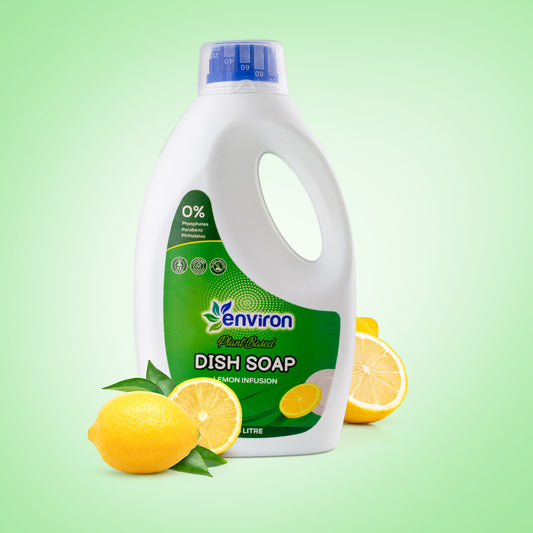
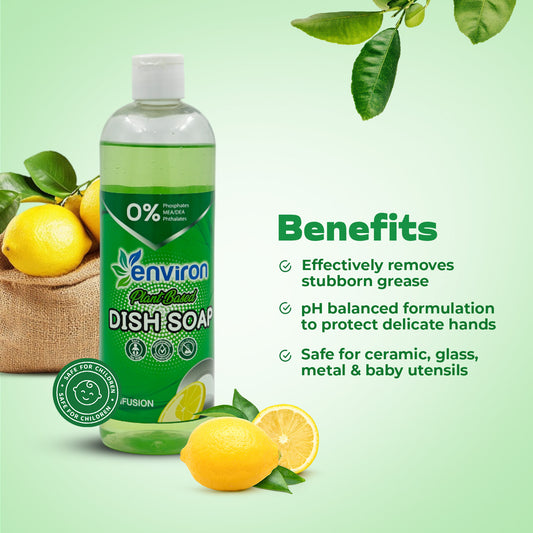
This is where Environ Plant-Based Dish Soap fits into the everyday feeding routine. Its pH-balanced and biodegradable formulation is designed to leave no harmful residues behind and effectively remove stubborn grease and clean baby utensils, including ceramic, glass and metal. It is fortified with bio-enzymes to help tackle tough stains and infused with lemon essential oil for a fresh scent after washing.

The formulation is free from harsh chemicals and toxins, including phthalates and parabens, bleach, ammonia, chlorine, formaldehyde, VOCs, heavy metals, as well as synthetic fragrance, giving parents a more considered choice for cleaning the feeding utensils their little ones use every day.
Explore Environ Plant-Based Dish Soap for everyday baby bottle and feeding utensil cleaning.
Final Takeaway
So, can detergent residue on utensils be linked to infant skin or gut sensitivity? Detergent exposure can potentially cause irritation when residue comes into contact with the skin or is ingested, but this does not mean that every bottle washed with dishwashing liquid will cause harm. The greater focus should be on how the bottle is cleaned, how much product is used, how thoroughly it is rinsed and what formulation you choose for everyday use.
For parents, careful bottle hygiene is about more than removing visible milk residue. It is also about minimising unnecessary detergent residue and making thoughtful choices about the products used on items that go directly into your baby's mouth. Using the recommended amount, rinsing thoroughly and allowing feeding items to dry properly remain essential.
Choosing a thoughtfully formulated, plant-based dishwashing liquid such as Environ can be one part of that more considered routine. Because when it comes to your baby's feeding essentials, a bottle should be clean not only to the eye, but clean in the way that matters.
Frequently Asked Questions
Can detergent residue remain on baby bottles after washing?
Yes. Small amounts of detergent residue can potentially remain if too much dishwashing liquid is used or the bottle, teat or feeding utensil is not rinsed thoroughly. Using the recommended amount and rinsing well can help minimise residue.
How should I wash baby bottles to prevent detergent residue?
Wash the bottle and feeding accessories with the recommended amount of dishwashing liquid, rinse them thoroughly under clean running water and allow them to dry completely before the next feed. Proper washing should come before sterilisation.
Does more dishwashing liquid clean baby bottles better?
No. Using more dishwashing liquid does not necessarily remove more milk or food residue. It can simply leave more cleaning solution that needs to be rinsed away. Following the recommended amount is usually the better approach.
Are plant-based dishwashing liquids suitable for cleaning baby bottles?
Yes, when they are specifically formulated for baby utensils. Plant-based dishwashing liquids can be a considered choice because they use plant-derived cleaning ingredients to break down grease, milk and food residue instead of toxic chemicals. Environ Plant-Based Dish Soap uses a pH-balanced formulation with bio-enzymes and probiotics and is suitable for baby utensils, including ceramic, glass and metal. Always use the recommended amount and rinse thoroughly after washing to minimise detergent residue.
What should I look for in a dishwashing liquid for baby bottles?
Look for a dishwashing liquid specifically suitable for baby utensils, with clear ingredient information and a thoughtfully formulated cleaning system. A pH-balanced, plant-based formulation with bio-enzymes can be a considered choice. Most importantly, use the recommended amount and rinse bottles, teats and feeding utensils thoroughly to minimise detergent residue.