
What your daily cleaning routine might be quietly doing to your health over time
The Short Answer
Most people judge a cleaning product by how it performs in the moment. Does it cut through grease? Does it leave the floor shining? Does the bathroom smell clean? These are fair questions. But they are only half the picture. The other half is what happens to the people living in that space after the cleaning is done. What stays on the surfaces your children touch. What gets absorbed through the skin during repeated handwashing. What the VOCs released from your floor cleaner are doing to indoor air while the air conditioning recirculates it all day. Strong cleaning works instantly but what happens with repeated daily use matters just as much.
Cleaning Is Built Into Everyday Routines
It is part of everyday routines.
-
Kitchen surfaces are wiped multiple times using a cleaner for kitchen
-
Floors are cleaned regularly
-
Dishes are washed after every meal using dishwashing liquid
-
Hands are washed throughout the day
-
Laundry runs frequently
In homes with children and pets, these touchpoints happen even more frequently
A toddler crawling on a freshly cleaned floor.
A child washing hands multiple times.
Surfaces are being touched again and again.
This frequency is what changes everything.
A product used once behaves very differently from something used repeatedly every day.
Your Skin Is Not a Surface
This is where the existing conversation about cleaning products tends to fall short.
Skin is not a hard floor or a kitchen counter. It is living tissue with an active barrier that protects the body from what is outside it. When that barrier is repeatedly disrupted, the effects are not just cosmetic. They are biological.
The skin's outer layer works as a gatekeeper. It maintains moisture, regulates temperature, and blocks external irritants from entering the body. When it is repeatedly exposed to harsh synthetic cleaning ingredients, that barrier becomes compromised. It loses moisture. It becomes thinner. It becomes more permeable.
At first, this shows up as:
-
slight dryness
-
mild tightness
-
reduced comfort
But over time, skin can become more reactive.
This matters for everyone. It matters more for people with eczema, skin allergies or sensitive skin, where that barrier is already compromised.
Why This Happens with Regular Cleaning Products
Many regular cleaning products are designed for fast, visible results.
To achieve this, they often use chemical-based ingredients such as phthalates, parabens, synthetic fragrance, bleach, ammonia, chlorine, formaldehyde and VOCs.
These ingredients can feel effective in the moment, but with repeated use, they can change how your skin and environment feel over time.
Here’s how:
Synthetic fragrance
Used to create a strong “clean” smell but with repeated use, it can affect indoor air quality and may feel uncomfortable for people sensitive to strong scents, especially in closed, air-conditioned spaces.
Formaldehyde and related preservatives
Used to keep products stable, but repeated exposure can affect how comfortable the skin feels over time.
VOCs
These are compounds that spread into the air during cleaning and stay in closed indoor spaces, which can make the environment feel heavier with frequent use.
Phthalates and parabens
Used in some products for fragrance stability and preservation, but with regular use, many households prefer to avoid them in daily-use products.
Bleach, ammonia and chlorine
These are used for strong cleaning action but with frequent contact, they can make skin feel dry or less comfortable.
Dyes and synthetic additives
Added for appearance or consistency, but they can leave light residues on surfaces and fabrics that come into regular contact with skin.
These ingredients are designed for immediate cleaning results.
But when exposure happens repeatedly throughout the day, they can gradually affect comfort, especially for people with sensitive skin, eczema or skin allergies.
The problem is compounded in Qatar, where air conditioning runs throughout the day in enclosed spaces. VOCs and chemical residues from cleaning products do not ventilate out. They stay in the air and on surfaces, creating ongoing exposure for everyone in the home, but especially for children whose skin is more permeable and whose immune systems are still developing.
What Research Suggests About Chemicals and the Body?
The discomfort people notice on their skin after repeated cleaning is often the most visible sign.
What is less visible is what happens when certain ingredients are absorbed through the skin or remain in the indoor environment with regular use.
Parabens are preservatives used in many cleaning and personal care products.
They are known to interfere with hormone signalling and can mimic estrogen. Research has detected parabens in human tissue, including breast tissue samples, suggesting that exposure can happen through everyday product use.
While a direct link to disease is still being studied, the concern is not one-time use, but consistent exposure over time.
Phthalates, commonly found in synthetic fragrances, are also associated with hormone-related concerns.
Studies have detected them in breast tissue, breast milk and amniotic fluid, indicating that exposure can go beyond surface contact with repeated use.
VOCs (such as formaldehyde) behave differently.
They are released into the air during cleaning, especially in enclosed, air-conditioned spaces, and can be inhaled or settle back onto surfaces and skin throughout the day.
None of this means that occasional use causes immediate harm.
The concern is daily, repeated exposure, which is now a normal part of modern cleaning routines.
How Frequent Cleaning Builds Exposure Over Time
Think about a typical day in a home, especially with children:
-
Floors are cleaned and children sit or play on them
-
Kitchen surfaces are wiped and food is prepared on the same area
-
Hands are washed multiple times throughout the day
-
Dishes are cleaned after every meal and that water comes in contact with hands and nearby surfaces
-
Laundry is done regularly, and clothes stay in contact with skin for long hours
-
Bathroom surfaces are cleaned, and residues can remain on taps, handles and doorknobs
Each interaction may seem small on its own.
But they are not isolated.
They repeat. They build. And over time, they create continuous exposure.
In air-conditioned environments where windows remain closed, these residues can stay within indoor spaces instead of clearing out quickly.
For adults, this may go unnoticed.
For children and pets, who spend more time on floors, touch surfaces frequently and have more sensitive skin, this exposure becomes more significant.
Does the "Squeaky Clean" Feeling Mean Anything?
That sharp, squeaky-clean sensation most people associate with a good clean has nothing to do with how safe or effective a product is.
It often means the opposite. That feeling comes from the skin or surface losing its natural oils and moisture. On a floor or countertop, that might feel satisfying. On the skin, it means the protective barrier has been stripped.
Foam and strong scent are both sensory signals designed to make products feel powerful. Neither one reflects the chemical profile of what is going on beneath the surface. The products that cause the least skin disruption and the least ongoing chemical exposure are often the ones that feel the most underwhelming in the moment.
Consistent comfort across repeated use, without the squeaky feel and without the chemical residue, is actually the more meaningful standard.
Strong Cleaning vs Non-Toxic Cleaning: What Changes Over Time
Why Qatar Homes Need to Think About This Differently
In most climates, opening a window after cleaning clears a significant portion of the chemical residue from indoor air. In Qatar, that option is rarely practical. Air conditioning is not optional, it is essential.
This means that VOCs from floor cleaners, surface sprays and dishwashing liquids have nowhere to go. They recirculate. Fine dust settles again quickly after cleaning because some cleaning products leave surface residues that attract particles, creating a cycle of cleaning more frequently with the same products.
For families with children who have eczema or skin allergies, this environment makes the choice of cleaning product significantly more consequential than it might be in a more ventilated space.
What Smarter Cleaning Actually Means
The goal is not to clean less effectively.
It is to clean without creating a second set of problems.
Plant based cleaning products and non toxic cleaning products are designed for this.
They clean effectively using plant-derived surfactants, essential oils and mineral salts, without relying on strong chemical-based ingredients that can leave residue, release VOCs or affect skin comfort over time.
This applies across daily use, from kitchen cleaner and floor cleaning to bathroom and sink cleaner.
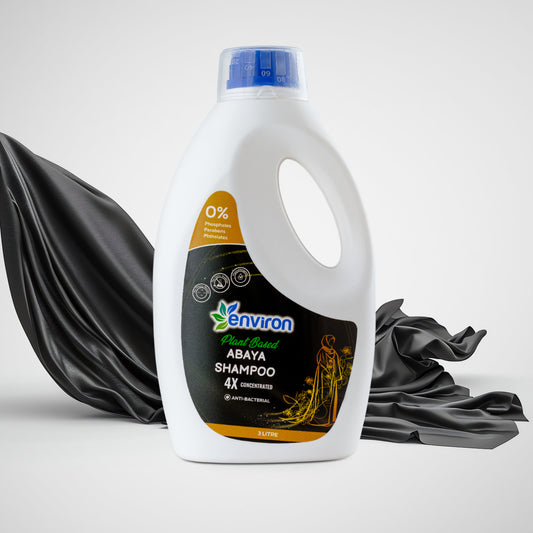
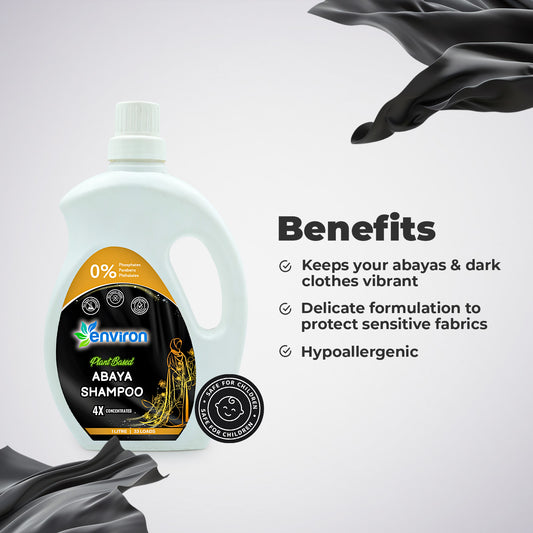
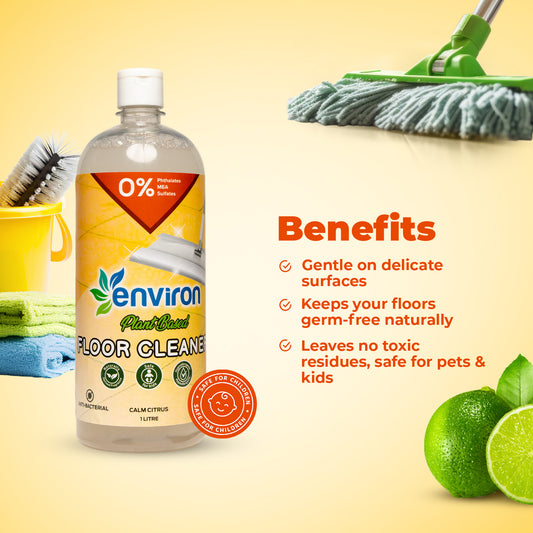
This is the approach Environ follows.
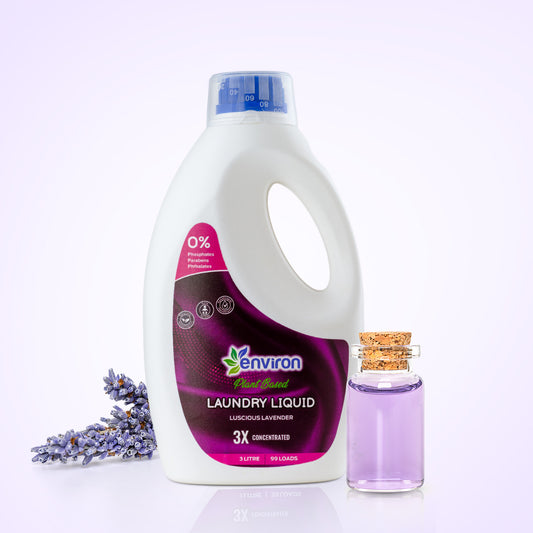
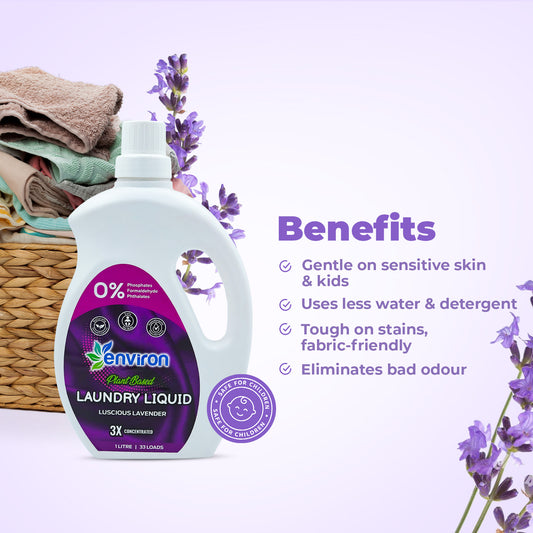
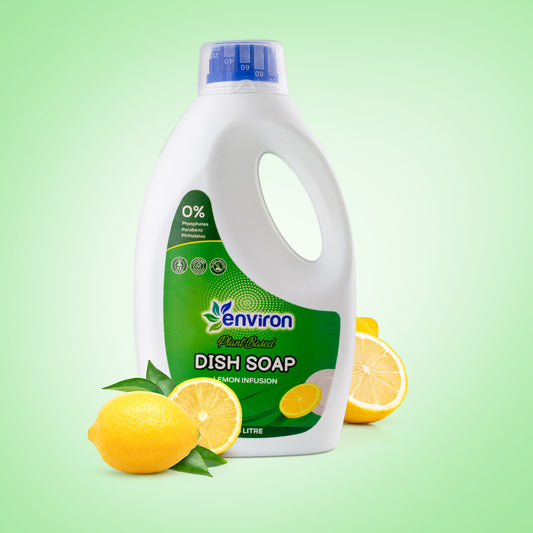
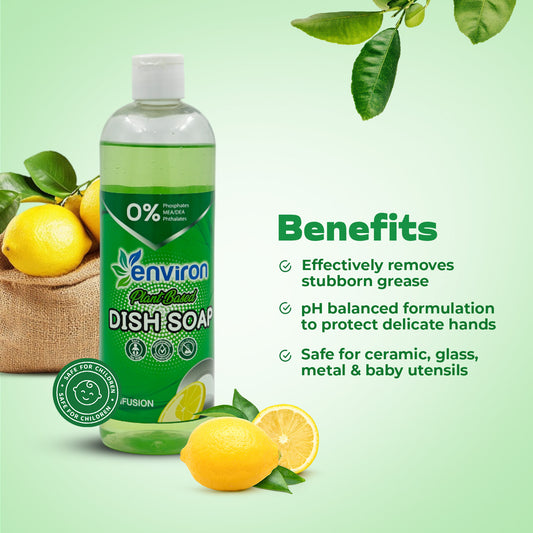
Each product in the Environ range is pH-balanced and hypoallergenic, designed for daily use in homes where cleaning happens repeatedly and where children, people with eczema and people with skin allergies are part of the household.
Environ is made without phthalates, parabens, formaldehyde, VOCs, synthetic fragrance, added dyes, bleach, ammonia and chlorine. These are not just label claims. They are the specific categories of ingredients linked to the health concerns described in this article.
The range carries GreenPro, IFRA and WHO GMP certifications, reflecting a standard of formulation that goes beyond basic safety into consistent, verified performance.
When Should You Reconsider What You Are Using
Most people don’t question their cleaning products until something starts to feel off.
It could be eczema that keeps coming back, skin allergies that flare up without a clear reason, or hands feeling uncomfortable after repeated washing.
These are often linked to regular use of strong chemical-based cleaning products, especially when used multiple times throughout the day.
At first, the effect is not obvious. But with repeated exposure, the impact can start to build.
That is when many people begin to rethink what they are using.
Switching to non toxic cleaning products or plant based cleaning products is not about reducing cleaning performance. It is about avoiding unnecessary exposure while maintaining comfort in everyday use.
Conclusion
Strong cleaning is not wrong. It is just incomplete as a standard.
It focuses on visible results in the moment. It does not account for what stays behind on the surfaces your children touch, what the skin absorbs through repeated daily contact, or what is building up in the air of a closed, air-conditioned home.
For health-conscious families or people with eczema or other skin allergies, young children or anyone thinking about long-term health rather than just the immediate clean, the ingredients in everyday cleaning products deserve the same level of attention as the ingredients in everyday food.
Most people are careful about what goes into their food. The same thinking is now being applied to what is used daily in the home.
Frequently Asked Questions
1. Are non toxic cleaning products safe for homes with kids and pets?
Yes. Non toxic cleaning products and plant based cleaners are specifically suited for homes where children and pets are regularly in contact with cleaned surfaces. They are formulated without the synthetic chemical ingredients that leave residues and accumulate in indoor air.
2. Can cleaning products trigger or worsen eczema?
Yes. Synthetic fragrances, formaldehyde-releasing preservatives, VOCs and added dyes are among the most common triggers for eczema flares. With repeated daily exposure, these ingredients can also cause allergic contact dermatitis in people who were not previously reactive.
3. Do cleaning chemicals get absorbed through the skin?
Research shows that certain chemicals, including parabens and phthalates, can be absorbed through skin contact and have been detected in human tissue. This is particularly relevant for people whose skin barrier is already compromised by eczema or sensitive skin, as a weaker barrier allows greater absorption.
4. What are parabens and why are they a concern in cleaning products?
Parabens are synthetic preservatives used in many cleaning and personal care products. They are classified as endocrine disruptors because they mimic estrogen in the body. Research has detected parabens in breast tissue biopsies, with higher concentrations found in malignant tumour tissue compared to healthy tissue. While a definitive causal link to disease has not been confirmed, the precautionary case for avoiding them in daily-use products is well supported by existing research.
5. What are VOCs and how do they affect indoor health?
VOCs (volatile organic compounds) are chemicals released into the air by many conventional cleaning products, floor cleaners and air fresheners. In enclosed indoor spaces, particularly those relying on air conditioning, VOCs accumulate rather than dissipating. They are linked to eczema flares, asthma, skin irritation and, with prolonged exposure to specific compounds like formaldehyde, increased cancer risk.
6. Why is indoor air quality a bigger concern in Qatar specifically?
Qatar's climate means that homes rely heavily on air conditioning with limited natural ventilation. Chemicals and VOCs released during cleaning remain in the indoor air and on surfaces rather than being cleared by outside airflow. This increases cumulative daily exposure for everyone in the household, particularly children who spend most of their time indoors.
7. What makes plant based cleaners a better choice for daily use?
Plant based cleaners use plant-derived surfactants and natural ingredients that clean effectively without relying on synthetic chemicals linked to skin disruption, hormone interference or VOC emission. This applies across the full range of daily-use products, including floor cleaner, cleaner for kitchen, dishwashing liquid, laundry liquid and detergent. For households that clean frequently, the difference in long-term chemical exposure between conventional and plant-based options is significant.