
Quick Answer
How to choose cleaning products for sensitive skin? Choose non-toxic cleaning products designed for regular use that do not disturb your skin’s natural balance. This includes everyday products like handwash, dishwashing liquid, dish soap and detergent that clean effectively without leaving your skin dry, tight or uncomfortable over time. With frequent contact, certain formulations can weaken the skin barrier by removing protective oils and increasing moisture loss, which leads to irritation over time.
Why Does Your Skin Start Reacting During Daily Cleaning?
Your skin is not reacting to cleaning itself.
It is reacting to frequent contact with cleaning products.
Products like handwash, dishwashing liquid and detergent come into contact with your skin multiple times throughout the day. Each use feels normal, but over time, frequent exposure starts affecting how your skin functions.
Many cleaning products are designed to remove grease quickly using strong cleansing systems. Along with dirt and oil, these can also remove some of the natural oils that protect your skin.
When this happens repeatedly:
-
Your skin loses moisture more easily
-
The outer protective layer becomes weaker
-
Irritation starts appearing more quickly
This is why dryness, tightness or sensitivity starts appearing over time.
Choosing formulations designed for regular use can help reduce this repeated impact and keep your skin more comfortable through the day.
Signs Your Daily Cleaning Routine May Be Irritating Your Skin
-
Dryness that comes back even after applying moisturiser
-
Itching during or after dishwashing
-
A tight or stretched feeling after handwash
-
Redness on fingers or hands
-
Discomfort after wearing freshly washed clothes
These signs usually develop gradually over time.
They are a result of continuous exposure, not a one-time reaction.
If you are noticing these signs regularly, it usually means your current products are not suited for repeated daily use.
Why These Reactions Do Not Show Up Immediately
A single use rarely causes a visible problem.
But your skin does not fully recover if the same exposure happens many times a day.
Harsh cleaning formulations continue to affect your skin’s natural oils. Over time, your skin barrier becomes weaker and more reactive.
That is why the change feels gradual.
You notice it only after it becomes consistent.
Where Your Skin Comes Into Contact Most Often
Handwash Used Throughout the Day
This is the most frequent point of contact. Even small differences in formulation become noticeable because of how often it is used.
Dishwashing Contact on Hands
Dishwashing involves a longer contact time. Repeating this multiple times a day increases how much your skin is exposed.
Clothes Washed with Detergent
Many regular detergents leave behind residue that stays in contact with your skin even after washing.
Clothes, towels and bedding stay in contact with your skin for hours. Any residue left in the fabric stays in contact with your skin.
Fabric Softener and Conditioner in Daily Use
Products such as fabric softner designed to stay in fabric, which means they continue to remain in contact with your skin.
How Cleaning Product Formulation Makes a Difference
Not all cleaning products work the same way.
Many conventional products rely on strong cleansing systems that remove grease quickly but can also affect your skin when used repeatedly.
Plant based cleaning products are formulated differently.
They use plant-derived surfactants that clean effectively while being gentler on your skin during daily use.
They also avoid commonly used additives that are associated with irritation in some individuals.
Well-formulated plant-based products are often hypoallergenic and designed to reduce the chances of skin reactions.
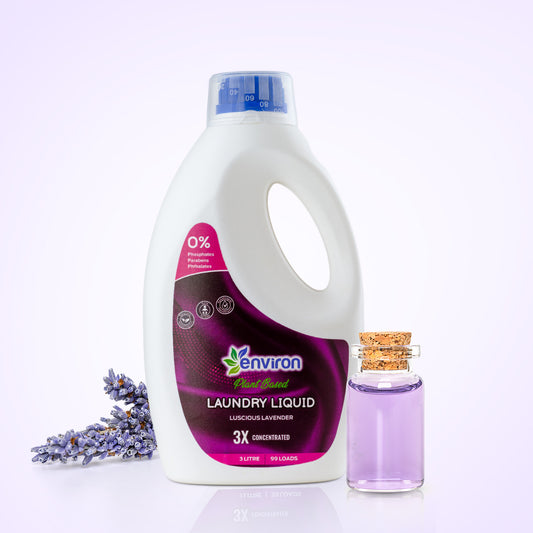
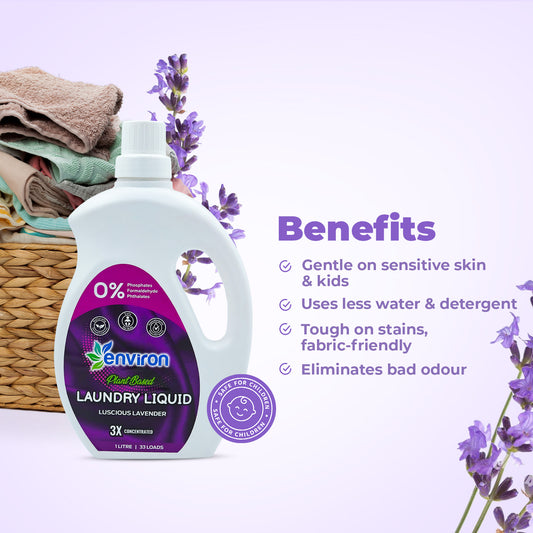
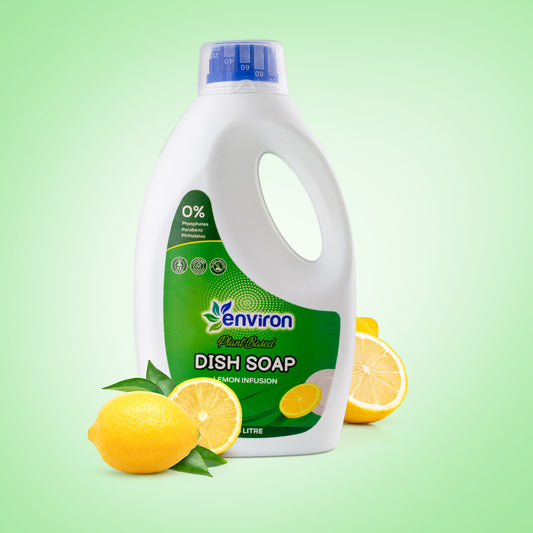
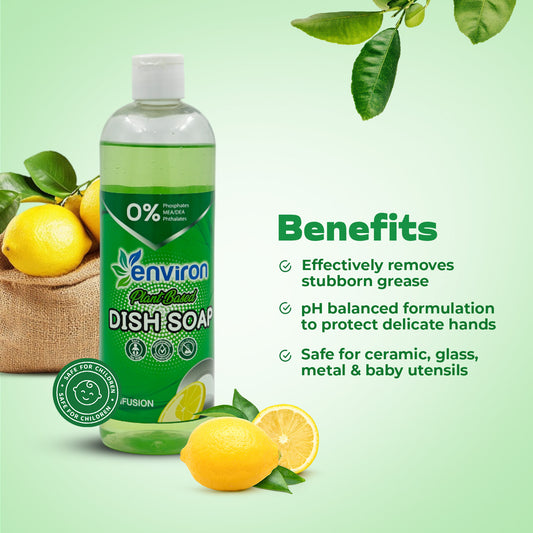
Environ follows this approach by focusing on formulations designed for regular use without disturbing your skin’s natural balance.
This makes it easier to maintain cleaning performance without putting additional stress on your skin through repeated use.
Certifications such as GreenPro, IFRA and WHO-GMP indicate that the products are developed under controlled standards for safety, formulation quality and consistency.
How to Choose the Right Cleaning Products for Sensitive Skin?
-
Check how your skin feels after repeated use
Not after one wash, but after using it multiple times a day -
Avoid products that leave your skin feeling tight or dry
This usually means your skin’s natural balance is being affected -
Choose products that rinse off properly
Anything left behind continues interacting with your skin -
Look for verified product standards
Certifications like GreenPro and WHO-GMP add an extra level of trust
If You Have Sensitive Skin or Allergies
Your skin barrier is already more reactive.
This means it loses moisture faster and reacts more easily to repeated contact.
Because of this, even normal exposure can lead to dryness, redness or irritation over time.
Choosing the right products becomes more important in your case.
Why Your Entire Cleaning Routine Matters?
Your skin is not reacting to one product.
It is reacting to everything used throughout the day.
Handwash, dishwashing liquid and detergent all contribute to repeated exposure. When this adds up, your skin starts showing signs.
Changing one product helps.
Changing the overall routine makes a bigger difference.
How Daily Cleaning Choices Affect Your Home Environment?
Cleaning products do not stay limited to surfaces.
They remain on hands, fabrics and commonly touched areas.
Children and pets come into contact with these more frequently. Their skin is more delicate and reacts more easily.
Some cleaning products are also associated with respiratory discomfort or long-term health concerns when used regularly in enclosed spaces.
This makes daily product choice more important than it seems.
Final Thought
If your skin feels dry, itchy or irritated during regular cleaning, there is a reason behind it.
It comes from repeated contact over time.
Choosing products that clean effectively without disturbing your skin’s natural balance helps reduce this effect and keeps your routine comfortable.
A small change in what you use every day can make a noticeable difference in how your skin feels over time.
FAQs
Can cleaning products cause skin irritation?
Yes, cleaning products can cause skin irritation, especially with frequent use and prolonged contact. Some formulations can gradually affect your skin’s natural oils, which weakens the protective barrier over time. This can lead to dryness, itching or sensitivity, even if you don’t notice it immediately.
Why do my hands feel dry after using handwash regularly?
Frequent handwashing can reduce your skin’s natural oils, which help retain moisture. Over time, this can leave your hands feeling dry, tight or slightly irritated, especially if the product is used multiple times throughout the day.
Can detergent affect my skin through clothes?
Yes, detergent can affect your skin through clothes. Residue left in the fabric after washing remains in contact with your skin for long hours through clothing, towels and bedding, which can contribute to irritation over time.
Is dishwashing liquid harsh on hands?
Dishwashing liquid can feel harsh on hands when used frequently or for longer durations. Since it is designed to break down grease, repeated exposure can affect your skin’s natural balance and lead to dryness or discomfort.
Are plant-based cleaning products better for sensitive skin?
Plant-based cleaning products are generally formulated to be gentler during regular use. They are designed to clean effectively while reducing the chances of disrupting your skin’s natural barrier, which makes them a better option for people with sensitive skin.