
Quick Answer
Freshly washed bedsheets can still make your skin itchy at night. While heat, dry skin and skin conditions may be factors, your laundry detergent and fabric conditioner can also contribute to irritation in some people. Looking at the products used to care for your bedsheets may help you find the overlooked cause.
It started as a small irritation.
For some people, bedtime is when an unexplained itch seems to show up. That was exactly what started happening to Ahmed.
There was nothing unusual about his routine. A shower, fresh clothes, a cool bedroom and freshly washed bedsheets. His bed felt clean and comfortable.
Yet, almost every night, just after settling in, the itching would begin.
A scratch on his arm. Then his shoulder. Sometimes his legs.
He blamed the heat, the dust or simply dry skin. He even started changing his bedsheets more often.
But the itching kept coming back.
If the sheets were clean, what was making his skin uncomfortable?
That question is worth looking at more closely.
What Could Be Hiding Behind the Itch?
The answer may not always lie in the bedsheet itself.
Sometimes, it is worth looking at what the fabric has been exposed to during laundry care.
Your bedsheets are washed and conditioned regularly, making the products used to care for them worth considering too. From the laundry detergent used to clean them to the fabric softener used to soften them, certain ingredients such as fragrances, preservatives and cleansing agents may irritate some people.
A review published in SkinMed mentions that residual detergent surfactants can remain on fabrics after washing and may be enough to irritate some people with sensitive skin or existing skin conditions. A study named Contact Allergens in Top-Selling Textile-care Products identified potential contact allergens in commonly used textile-care products, including fragrances and preservatives.
So, freshly washed does not necessarily mean that every person will find the fabric equally comfortable against their skin.
And that is where your choice of laundry care becomes worth considering.
Before You Blame the Bedsheets
Laundry products are only one possible factor. Heat, sweating, dry skin, eczema, contact dermatitis and other skin conditions can also cause or worsen itching at night.
This is why the pattern matters.
If the itching appears mainly at bedtime, keeps returning despite freshly washed bedding or seems to coincide with a change in your washing detergent, it may be worth looking at your laundry routine alongside other possible triggers.
And if the itching continues, becomes intense or comes with redness, swelling or a persistent rash, it is better to have the underlying cause assessed rather than assuming your bedsheets are responsible.
Beyond Freshness: What Does Your Laundry Formula Contain?
We often associate freshness with fragrance. A pleasant scent can make freshly washed bedsheets feel cleaner, especially when warm weather makes that fresh-laundry feeling appealing. So, it is easy to choose a laundry detergent or laundry conditioner for the scent it leaves behind.
But the liquid detergent you use for your bedsheets may also be used for your children's clothes, towels and other everyday family fabrics. That makes it worth looking beyond how well it cleans or how it smells and taking a closer look at what is actually in the formula.
Certain ingredients may be well tolerated by some people but may contribute to irritation in others. When a product becomes part of your family's everyday laundry routine, its ingredients deserve attention too.
What Should You Look for in a Laundry Detergent?
When choosing a washing liquid for bedsheets, look beyond the cleaning claim and check the formulation. If sensitive skin is a concern, the American Academy of Dermatology Association commonly recommends fragrance-free laundry detergents, particularly for eczema-prone skin.
Look for:
● A formulation suited to your skin needs.
● Fragrance-free options if fragrance is a known trigger for you or your family.
● Dye-free formulations, particularly when washing bedding for sensitive skin.
● Fewer unnecessary additives, especially when the product is being used regularly.
● A clearly disclosed ingredient list, so you know what you are choosing for your family's laundry.
The point isn't to fear every unfamiliar ingredient. It is to make the laundry choice with the same thought you would give any product used regularly around your family.
And once you know what you want from your laundry care, the next question is simple: what does that look like in practice?
| Ingredients to Be Mindful of | |
|---|---|
|
|
A Laundry Choice Made with Your Family in Mind
You do not need to choose between a laundry liquid that cleans effectively and one with a more considered formulation. The two can go hand in hand.
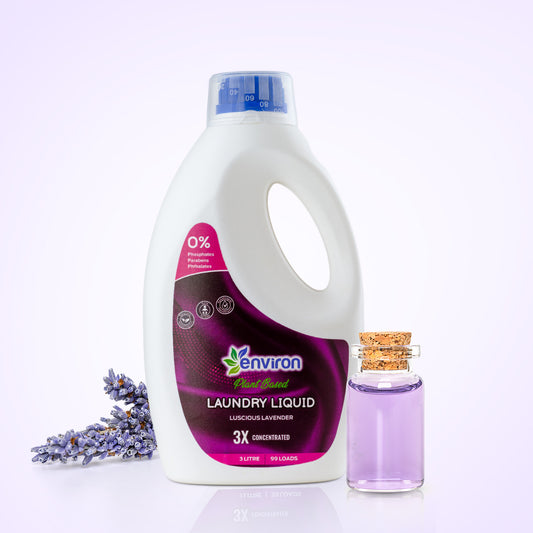
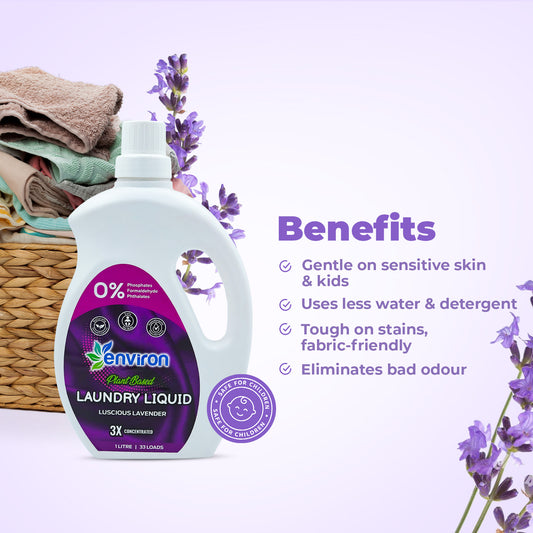
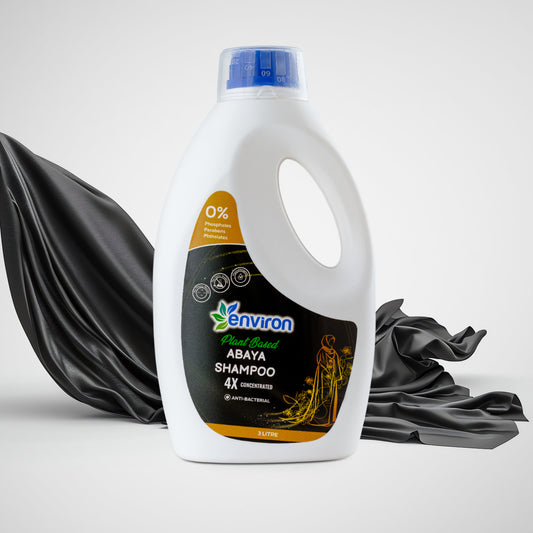
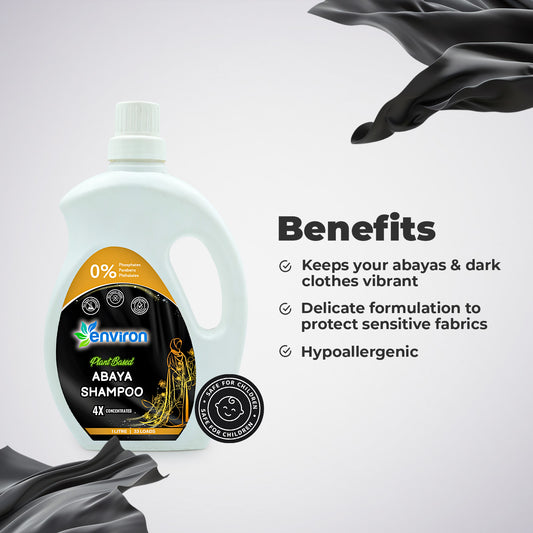
Environ approaches laundry care with that balance in mind. Its plant-based laundry liquid uses plant-based surfactants and bio-enzymes to clean everyday dirt and stains. At the same time, the formulation leaves out ingredients such as bleach, ammonia, chlorine, dyes, optical brighteners, formaldehyde and synthetic fragrance.
That matters when the same laundry routine takes care of everything from your bedsheets and towels to your children's everyday clothes. The formulation is designed to be non-toxic and hypoallergenic, with a scent-free option for those who prefer to avoid fragrance in their laundry.
And for the fabric-care step, the Plant-Based fabric conditioner works alongside the laundry liquid to leave fabrics soft and cared for.
Plant-based laundry care shouldn't mean choosing between cleaning power and a thoughtful formula. You can expect clean laundry while staying mindful of what goes into every wash.
Don't Keep Guessing If the Itching Persists
Notice a pattern first. If the itching started after you changed your washing liquid for clothes or fabric conditioner, consider switching to a simpler formulation and see whether the discomfort changes.
If changing your laundry products does not improve the problem or if the itching becomes persistent, severe or is accompanied by a rash, redness, swelling or other skin changes, don't keep changing detergents and bedsheets hoping to find the answer. Itching can have many causes and persistent symptoms should be assessed by a healthcare professional.
When Clean Isn't Quite Enough
Freshly washed bedsheets should be one of the comforts you look forward to at the end of the day. If you keep waking up itchy despite clean bedding, don't assume that washing more often is the answer.
Look at the bigger picture. Your skin, your sleeping environment and the laundry detergent and fabric conditioner used on your bedding can all be part of the equation.
You may not find the answer in your bedsheets themselves. But paying attention to what you use to care for them can help you rule out one overlooked factor.
And if the itching doesn't go away, don't keep guessing. Get it checked.
References:
- Crawford C, Zirwas MJ. Laundry detergents and skin irritancy--a comprehensive review. Skinmed. 2014 Jan-Feb;12(1):23-31. PMID: 24720081.
-
How can I find eczema friendly products? (n.d.). https://www.aad.org/public/diseases/eczema/childhood/triggers/friendly-products
-
Bai, H., Tam, I., & Yu, J. (2020). Contact Allergens in Top-Selling Textile-care Products. Dermatitis : contact, atopic, occupational, drug, 31(1), 53–58. https://doi.org/10.1097/DER.0000000000000566