
Quick Answer
Dermatologists increasingly recognise that skin comfort is influenced by more than just the products applied directly to the body. Clothes, towels, bed sheets and pillow covers stay against the skin for many hours every day, making everyday laundry habits part of the broader conversation around sensitive skin. In other words, the products used to wash the fabrics we wear and sleep on can become part of our wider everyday skin-care routine. That is one reason researchers and dermatology experts are paying closer attention to the role that detergent residue on fabrics may play over time.
The Part of Your Skin Routine Most People Never Think About
Most people with sensitive skin have changed a soap, face wash or moisturiser because it did not feel quite right. We pay attention to the products that go directly onto our skin and often spend time comparing ingredients before deciding what to use.
Yet there is one everyday habit that rarely gets the same attention: the products used to wash the clothes, towels and bed sheets that stay close to us every day.
Think about the fabrics you use regularly. The T-shirt you wear to work. The school uniform your child wears for hours. The bed sheets and pillow covers you sleep on every night. The towels you use after every shower. You wear them, sleep in them and use them every day, yet most of us rarely think about the products used to wash them.
We often spend time choosing the right products for our skin, but rarely stop to think about the products used to wash the clothes and bedding we use every day.
That simple shift in perspective is one reason dermatologists are increasingly looking beyond traditional skincare products and paying more attention to the everyday factors that shape how our skin feels.
So What Actually Stays on Clothes After Washing?
Most of us assume that once the washing machine finishes its cycle, everything added during the wash disappears completely. In reality, the final result depends on several everyday factors, including the amount of detergent used, the size of the load, the wash programme selected and how thoroughly the fabrics are rinsed.
Whether you use a laundry detergent or a liquid detergent for clothes, the purpose is the same: to help remove dirt, sweat, body oils and everyday stains from fabrics. During rinsing, the majority of those ingredients are washed away.
However, researchers have long been interested in what remains on fabrics after a normal wash cycle. Depending on the amount of product used, the wash conditions and how thoroughly clothes are rinsed, small amounts of detergent residue on fabric fibres may remain after laundering.
In simple terms, detergent residue refers to traces of washing product that can remain on fabrics after the wash and rinse cycles are complete. This does not mean clothes are "dirty" after washing. It simply explains why scientists continue to study what remains on fabrics after everyday laundry routines.
For most households, this is simply a normal part of everyday laundry. But when clothes, towels and bedding are used for many hours every day, it raises an interesting question: should the products used to wash those fabrics receive the same level of attention as the products applied directly to the skin?
What the Research Actually Shows?
People often think choosing a laundry product is simply a matter of preference. Researchers are now asking a broader question: what happens when the products used during washing become part of the fabrics we use every day?
According to research published through the PubMed database, scientists studying laundry detergents and detergent rinse residue found that these substances demonstrated direct disruptive effects in laboratory skin models. The findings do not mean that every detergent causes skin problems but they do help explain why researchers continue to study the role of repeated fabric contact and detergent residue after washing.
One reason scientists are studying detergent residue is that clothes and bedding remain part of our daily lives long after the wash cycle ends. Researchers have therefore explored whether repeated detergent exposure may interact with the skin barrier over time.
A study published in PLOS ONE reported that laundry detergent exposure disrupted the skin barrier and promoted allergic skin inflammation in a preclinical laboratory model. While these findings should not be interpreted as direct evidence of the same effects in all people, they have contributed to broader scientific interest in the interaction between laundry products and sensitive skin.
Practical dermatology guidance reflects this wider perspective as well. The American Academy of Dermatology (AAD) recommends fragrance-free and dye-free laundry detergents for people with eczema-prone skin, recognising that the products used to wash clothing and bedding can become part of a broader skin-care routine.
Skin health is influenced by many factors, including genetics, environment, climate and individual sensitivity. No single product explains every skin concern. However, the growing body of research suggests that the products used during everyday laundry care are one part of the wider environment that dermatologists increasingly encourage people to consider.
Taken together, these findings help explain why everyday laundry habits are becoming part of the wider conversation around sensitive skin and daily skin care.
Why Your Laundry Routine Is Part of Everyday Skin Comfort?
Most skincare products stay on the body for only a short time. The clothes, towels and bedding we use every day remain part of our daily lives for much longer.
A freshly washed shirt may stay against your skin throughout the day. Bed sheets and pillow covers stay close to you throughout the night. That is one reason dermatologists increasingly encourage people with sensitive skin to think beyond traditional skincare products. Everyday laundry habits may seem unrelated at first but they are one part of the wider environment that surrounds the skin every day.
More Detergent Does Not Always Mean Cleaner Clothes
One of the most common assumptions in household laundry is that adding more product will automatically produce cleaner results.
In reality, effective cleaning depends on a combination of factors, including the formulation, the amount used, the size of the load, water conditions and how effectively the fabrics are rinsed afterwards. Using more detergent than necessary does not always improve washing performance and it does not automatically mean fabrics will be cleaner.
The goal of laundry is not to leave more product behind. It is to leave behind cleaner fabrics.
Once that distinction becomes clear, the focus shifts away from using the strongest-smelling or largest amount of product and towards choosing balanced formulations and sensible rinsing and washing habits that support everyday fabric care.
What to Look for if Someone at Home Has Sensitive Skin?
If someone in your household has sensitive skin, it may be worth paying closer attention to the products used during the everyday laundry routine. The goal is not to change every habit overnight but to make thoughtful fabric care choices.
Many families now look for:
-
Effective cleaning performance that comes from the formulation itself.
-
Greater transparency around ingredients and formulation.
-
Balanced products that do not rely on overpowering fragrance.
-
Good rinsing and washing habits that help avoid unnecessary product build-up.
-
Products that prioritise balanced formulations over overpowering fragrance.
For many households, the conversation is no longer just about removing stains. It is also about choosing products that fit naturally into a thoughtful everyday laundry routine.
Choosing Everyday Laundry Products with Sensitive Skin in Mind
If the fabrics we wear and use every day deserve the same thoughtful attention as the products we apply directly to our skin, then the products used during washing matter too.
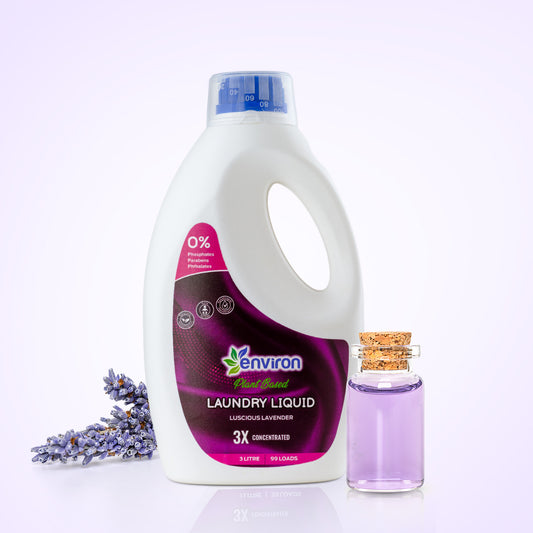
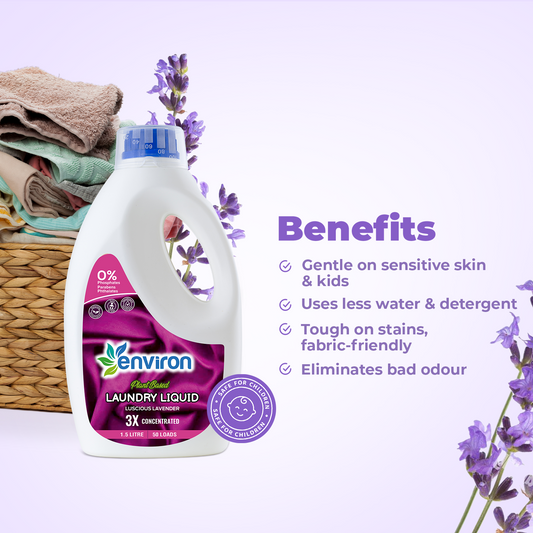
At Environ, we believe effective laundry care should come from the quality of the formulation rather than relying on overpowering fragrance or unnecessary additives to create the impression of cleanliness.
Our plant-based approach uses plant-derived surfactants and enzymes to help tackle everyday dirt and stains while taking a thoughtful approach to ingredient selection and everyday fabric care. Our formulations are VOC-free and are developed without phthalates, parabens, bleach, chlorine, formaldehyde, heavy metals, optical brighteners, dyes, and toxic synthetic fragrances.
Whether you choose a laundry detergent or complete your household laundry routine with a fabric conditioner or laundry conditioner, we believe effective cleaning should come from the formulation itself rather than from an overpowering scent or unnecessarily harsh ingredients.
Our goal is simple: to help families care for the fabrics they use every day with products designed for responsible, modern living.
Conclusion
For many people, looking after sensitive skin starts with the products they apply directly to their body. But the fabrics we wear, sleep on and use every day are part of that experience too.
Modern dermatology is increasingly encouraging people to think beyond skincare products alone and to pay closer attention to the everyday habits that shape the environment around the skin. Laundry routines and the products used to care for clothing and bedding are one part of that bigger picture.
Sometimes, the simplest way to rethink your skin-care routine is to look beyond the bathroom shelf and pay a little more attention to the products used throughout the rest of the home.
If this article has made you think differently about your household laundry routine, explore Environ's range of plant-based laundry care products created for modern family living.
Can detergent residue stay on clothes after washing?
Yes. Depending on the amount of product used, the wash cycle selected and how thoroughly fabrics are rinsed, small amounts of detergent residue on fabrics may remain after laundering.
Why are dermatologists paying attention to laundry products?
Dermatologists increasingly recognise that the everyday environment surrounding the skin matters, not only the products applied directly to the body. Clothing and bedding remain close to the skin for many hours each day, making household laundry habits one part of the broader conversation around sensitive skin.
Does using more detergent make clothes cleaner?
Not necessarily. Effective cleaning depends on the formulation, the amount used, the wash conditions and proper rinsing. Using more product than needed does not automatically improve washing performance.
What should people with sensitive skin look for in a laundry detergent?
Many people prefer products that focus on effective cleaning, balanced formulations, ingredient transparency and a more thoughtful approach to fragrance and everyday fabric care.
Why do dermatologists recommend fragrance-free laundry products for some people?
Organisations such as the American Academy of Dermatology recommend fragrance-free and dye-free laundry detergents for people with eczema-prone skin because the products used to wash clothes and bedding can become part of a broader skin-care routine.
Can changing your laundry routine help support everyday skin comfort?
Many dermatologists encourage people with sensitive or eczema-prone skin to think about the broader environment around the skin, including clothing and bedding. Paying attention to laundry products, rinsing habits and ingredient transparency can become one part of a thoughtful everyday skin-care routine.