
Quick Answer
Yes. Fragranced cleaning products can affect indoor air quality, particularly in homes where someone lives with asthma or respiratory sensitivities. Many fragranced detergents, floor cleaners and household sprays release volatile organic compounds (VOCs) into the indoor environment, where they can remain in the air after cleaning is finished. Research has found that people with asthma report adverse effects from fragranced products more often than the general population, making indoor air quality an important consideration for some households.
✓ Fragrance and cleaning performance are not the same thing.
✓ Many fragranced household cleaning products release VOCs into indoor air during normal use.
✓ The smell that remains after cleaning suggests that fragrance compounds may continue to be present in the indoor environment.
✓ Research has found that people with asthma report adverse effects from fragranced products more often than the general population.
✓ In air-conditioned homes, everyday cleaning choices can play a role in shaping the indoor environment.
The Smell That Stays After Cleaning
If you've ever opened a window after mopping the floor because the smell felt too strong, you're not alone.
You've finished mopping the floor. The dishes are washed. The kitchen looks spotless. Yet the house still smells strongly of lemon, lavender, pine, or "fresh linen" hours later.
Many people instinctively wait before letting children back into a freshly cleaned room or avoid using certain products late in the evening because the scent seems to linger. These small habits often develop without much thought because a strong smell has long been associated with a clean home.
But that lingering fragrance raises an interesting question. If the cleaning is over, why does the smell stay?
Why Does the Smell Stay After Cleaning?
Most people think of fragrance as something added simply to make a cleaning product smell pleasant. In reality, when a fragranced cleaning product is used, some fragrance compounds are released into the air while others settle onto fabrics, towels, bedding and household surfaces, which is one reason the scent can remain noticeable long after the floor has dried or the laundry cycle has finished.
For many people, this is simply part of the cleaning experience. But for households where someone lives with asthma or respiratory sensitivities, the lingering fragrance raises a different question: what exactly remains in the air after the cleaning is done?
What the Research Actually Shows?
The lingering smell after cleaning is not simply a matter of perception. When a fragranced cleaning product is used, a mixture of fragrance compounds and volatile organic compounds (VOCs) can be released into the indoor air. Some of these compounds may remain detectable after the cleaning itself is finished, which is one reason the scent can continue to linger.
According to research published in Air Quality, Atmosphere & Health, many of the fragranced products linked to reported respiratory problems are not unusual industrial chemicals but everyday household products such as laundry detergents, floor cleaners, and air fresheners. In the same study, nearly 58% of people with asthma reported adverse health effects from exposure to fragranced consumer products, including respiratory problems and asthma attacks.
One of the more important findings was that people did not always have to use these products themselves to experience symptoms. Many participants reported reactions after being around fragranced products used by others or after entering indoor spaces where these products had recently been used. In other words, the cleaning may be finished, but the indoor exposure may continue.
These observations have been supported by other population-based studies, which have consistently found that people with asthma appear to experience fragrance-related effects more often than the general population. Separate research has also linked frequent exposure to commonly used household cleaning products during early childhood with a greater likelihood of asthma and recurrent wheezing later in life.
Asthma is influenced by many different environmental and genetic factors and no single product can explain every case. However, this growing body of research suggests that the products used during everyday cleaning are one part of the broader indoor environment that families, researchers and healthcare professionals are paying increasing attention to.
Why This Conversation Is Especially Relevant in Qatar?
In Qatar and across the Gulf region, families spend much of the year inside air-conditioned homes, offices, schools and shopping centres. Windows often remain closed because of heat, humidity and dust, limiting the exchange between indoor and outdoor air.
As a result, the air inside the home is shaped largely by everyday activities. Cooking, candles, air fresheners, laundry products and household cleaning products all contribute to the air inside the spaces where people spend most of their time.
When fragranced cleaning products are used regularly, the compounds they release may linger indoors rather than quickly clearing away. For households already paying attention to asthma, allergies or breathing comfort, this makes the conversation around indoor air quality feel much more personal and practical.
A Stronger Smell Is Not the Same as a Stronger Clean
One of the biggest assumptions in household cleaning is that a stronger smell means a product is working harder. For decades, many people have associated a lingering fragrance with a cleaner home.
In reality, fragrance and cleaning performance are two different things. The ingredients responsible for lifting grease, breaking down stains and removing dirt are not the same as the ingredients that create a noticeable scent.
A floor can be thoroughly cleaned without smelling strongly of pine and clothes can be properly washed without carrying a fragrance that lasts for days. Once that distinction becomes clear, the conversation shifts from simply asking whether a product smells clean to asking whether it helps create a home that feels comfortable for everyone who lives there.
What to Look for if Someone at Home Has Asthma?
If someone in your household lives with asthma or respiratory sensitivity, it may be worth paying closer attention to the products used every day around the home. The goal is not to remove every fragrance from daily life but to look beyond the idea that a stronger scent automatically means a better clean.
Many families now focus on a few simple considerations:
-
Cleaning performance that comes from the formulation itself, not an overpowering fragrance.
-
Greater transparency around ingredients and how products are made.
-
Products that do not rely on a strong lingering scent to signal that they are working.
-
Well-balanced formulations, including plant-derived surfactants and enzyme-based ingredients, that are designed for effective everyday cleaning.
For many households, the conversation is no longer about choosing the strongest-smelling product. It is about choosing products that help maintain a clean and comfortable home for everyone who lives there.
What to Look for in Everyday Cleaning Products?
At Environ, we believe a clean home should not have to smell overpowering to feel clean.
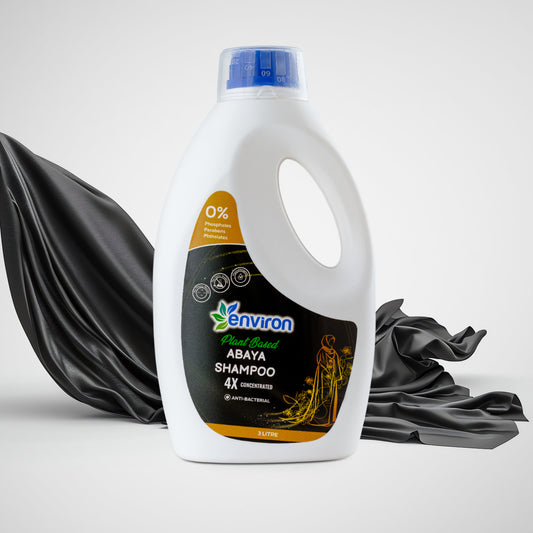
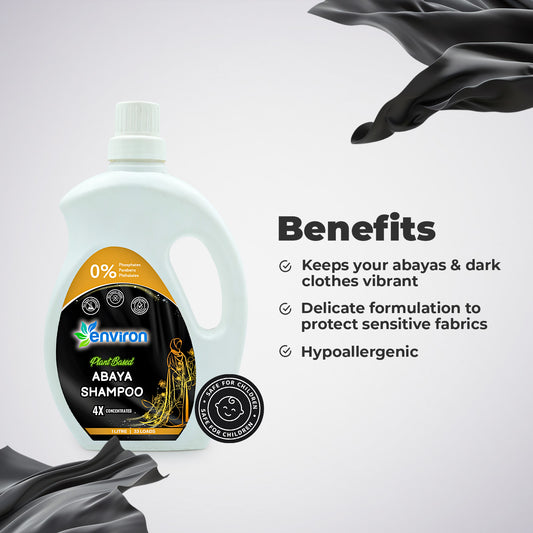
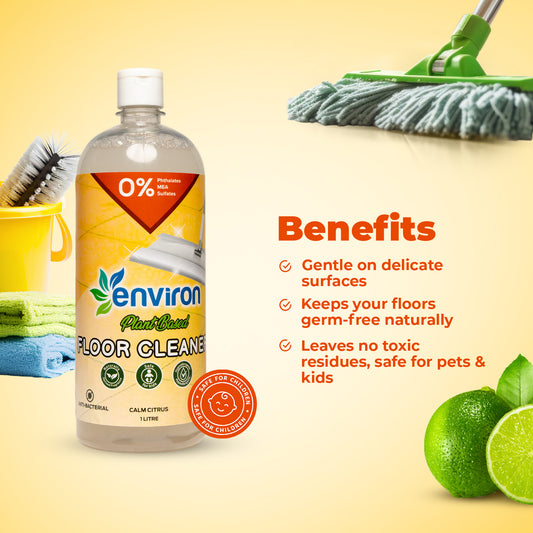
That is why our approach focuses on effective cleaning through carefully balanced formulations rather than relying on an intense lingering fragrance. Our plant-based range uses plant-derived surfactants and enzymes to help tackle everyday dirt, grease and stains while avoiding reliance on harsh chemicals and overpowering fragrances as signals of cleaning performance.
Our formulations are developed to be VOC-free and are made without ingredients such as phthalates, parabens, bleach, chlorine, formaldehyde, heavy metals, optical brighteners, dyes and toxic synthetic fragrances. Instead of relying on harsh chemicals or overpowering scents to create the impression of a deeper clean, we believe cleaning performance should come from the formulation itself.
Whether it is laundry care, kitchen cleaning, dishwashing liquid or floor care, our focus is on helping families maintain a clean and comfortable home with products they can feel confident using every day. Our commitment to responsible formulation is also supported by GreenPro certification, IFRA-compliant fragrance practices and WHO-GMP manufacturing principles.
Conclusion
For many families, the idea of a clean home has long been tied to a strong lingering scent. But as we learn more about indoor living and everyday cleaning habits, that assumption is beginning to change.
Sometimes, creating a more comfortable home does not mean using more fragrance. It simply means choosing cleaning products that do the job without relying on it.
If this article has made you think differently about the role cleaning products play in your home, explore Environ's range of plant-based cleaning products created for modern family living.
Can fragranced cleaning products affect people with asthma?
Research has found that people with asthma report respiratory problems, asthma attacks and other adverse effects from fragranced products more often than the general population. Scientists are increasingly studying how everyday indoor exposures may influence breathing comfort.
Why do cleaning smells linger after the cleaning is finished?
Many fragranced cleaning products release fragrance compounds and volatile organic compounds (VOCs) during normal use. In enclosed or air-conditioned spaces, some of these compounds can remain detectable after the cleaning itself is complete, which is one reason the scent may continue to linger.
Does a stronger cleaning smell mean a product cleans better?
No. The ingredients responsible for removing dirt, grease and stains are different from those that create a noticeable fragrance. A stronger smell is not necessarily a sign of better cleaning performance.
Can laundry detergents and fabric conditioners contribute to ongoing fragrance exposure?
Yes. Products such as laundry detergent, liquid detergent, washing liquid, fabric conditioner and fabric softner are used on clothing, bedding and towels that remain part of everyday family life long after the wash cycle has finished.
What should asthma-prone households look for in a cleaning product?
Many families look for products that focus on effective cleaning rather than overpowering fragrance, offer greater ingredient transparency and use balanced formulations that do not rely on harsh chemicals or intense lingering scents.