
Short Answer
Yes, sticky floors usually happen when the floor cleaner leaves residue behind, especially if too much product is used or it isn’t diluted correctly. Over time, this thin film builds up and makes floors feel sticky even when they look clean. A floor cleaner designed to leave minimal residue helps prevent sticky floors during regular mopping. This is also one of the most common reasons people search for answers like “why floors feel sticky after mopping” or “why floors feel sticky after cleaning.”
Why Floors Feel Sticky Even When They Look Clean
Sticky floors are one of those problems that make people doubt everything.
You mop. The floor looks shiny.
But once it dries, it feels slightly sticky underfoot and somehow attracts dust even faster.
This happens because clean and residue-free are not always the same thing.
In everyday household cleaning, floors are wiped and mopped repeatedly. If the cleaner leaves behind a thin film, it slowly builds up across tiles, marble, wood finishes and vinyl-like surfaces.
Over time, that buildup turns into the slightly sticky feeling people notice underfoot.
The #1 Cause of Sticky Floors After Mopping: Cleaner Residue
The most common cause of sticky floors is simple: too much product stays on the surface after mopping.
This usually happens when:
-
the cleaner is used in heavy concentration
-
mop water isn’t changed during cleaning
-
the floor is wiped repeatedly with the same residue
-
the cleaner is not designed for minimal residue during everyday use
Some formulas are designed to create a glossy look.
But if the shine comes from leftover film instead of actual cleaning, floors can start feeling sticky rather than fresh.
Explore Environ Plant-Based Floor Cleaner for a cleaner finish with minimal residue
Why Do Floors Feel Sticky After Mopping?
Floors usually feel sticky after mopping when floor cleaner leaves residue behind. This often happens when too much cleaner is used, the mop water isn’t changed frequently, or the product isn’t diluted correctly.
Over time, leftover film builds up on the floor surface and creates a sticky feeling.
What Is Floor Cleaner Residue?
Floor cleaner residue is the thin film left on floors when cleaning products do not rinse away completely during mopping.
When this film builds up over time, it can make floors feel sticky, attract dust faster and leave dull patches on the surface.
Why Adding More Floor Cleaner Makes It Worse
This is where many households accidentally create the problem.
When floors don’t feel clean enough, people naturally add more floor cleaner liquid to the bucket.
But adding more product often leads to:
-
a thicker residue layer
-
stickiness after drying
-
faster dust buildup
-
uneven patches in high-traffic areas
Most sticky-floor problems are not solved with more cleaning.
They are solved with the right formulation and the correct amount of product.
Your Mop Might Be Spreading the Stickiness
Sometimes the issue is not the cleaner alone. It’s the cleaning method.
A mop that isn’t rinsed properly or water that isn’t changed regularly can spread residue across the floor.
Common habits that lead to sticky floors include:
-
using the same bucket of water across several rooms
-
not wringing the mop enough
-
mopping repeatedly over the same area
-
using overly soapy solutions not meant for floors
If floors feel sticky mainly near entryways, kitchens or living areas, residue is often being redistributed in high-traffic zones.
Marble, Tile and Wood React Differently to Floor Cleaners
Many homes in Qatar use premium flooring materials such as marble or ceramic tiles, which can reveal residue buildup more quickly after mopping.
A good floor cleaner should work safely across:
-
ceramic tiles
-
marble
-
granite
-
natural wood
-
treated wood
-
metal trims and surfaces
A cleaner that leaves heavy residue can gradually change how these surfaces look and feel over time.
That’s why the floor cleaner liquid you choose matters more than foam or fragrance.
Want a simple routine that covers both floors and kitchen surfaces?
Also read: How to Keep Your Kitchen Germ-Free with the Right Cleaner for Kitchens and Floor Cleaner Liquid
What to Look For in a Floor Cleaner That Doesn’t Leave Residue
A floor cleaner designed for everyday use should:
-
lift dirt without leaving a sticky layer
-
rinse away easily with minimal residue
-
feel comfortable to use indoors
-
stay gentle on delicate surfaces
This is where plant-based, non toxic cleaners often fit better into modern cleaning routines.
Some conventional floor cleaners can leave behind a thin film after repeated mopping, especially if the product is used heavily. Over time, that film can build up and make floors feel sticky even when they appear clean.
Plant-based floor cleaners are often formulated to lift dirt while helping reduce leftover residue, which can make floors feel cleaner after drying.
If sticky floors keep coming back after mopping, switching to a cleaner designed to leave minimal residue can make a noticeable difference.
Why Floor Cleaner Safety Matters for Families, Kids and Pets
Floors are one of the most used surfaces in any home.
-
Children crawl on them.
-
Pets lie on them.
-
Families walk barefoot across them every day.
That means whatever is used to clean the floor becomes part of the everyday living environment.
In homes with kids or pets, many people prefer floor cleaners that avoid harsh chemical residues and are designed for frequent indoor use.
Plant-based cleaning formulations are often chosen for this reason. They focus on effective cleaning while helping reduce heavy residue and keeping indoor cleaning routines more comfortable.
For families, the goal is not just shiny floors.
It is floors that feel clean, comfortable and better suited for everyday living.
Why Some Floor Cleaners Leave Floors Sticky
For surfaces beyond floors, see how an For surfaces beyond floors, see how an all purpose cleaner fits into everyday surface cleaning routines.
How Environ Helps Prevent Sticky Floors
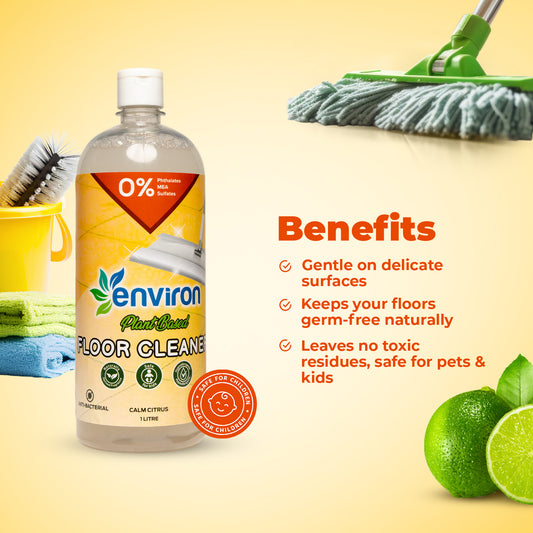
Environ Plant-Based Floor Cleaner is designed to clean floors deeply while helping prevent the residue buildup that can make floors feel sticky after mopping.
It is also highly concentrated, delivering up to 8× more washes, allowing you to use less product per bucket and reduce buildup.
The formula combines:
-
plant-based surfactants
-
probiotics
-
bio-enzymes
-
essential oils
These ingredients help lift dirt and break down stains while remaining gentle on premium home surfaces.
It works across:
-
ceramic
-
marble
-
granite
-
natural wood
-
treated wood
-
metal surfaces
making it suitable for mixed-surface homes.
Plant-based surfactants help remove dirt without leaving heavy residues.
Probiotics support freshness even after mopping.
Bio-enzymes help break down stains naturally.

The formula follows a “no toxins, no worries” approach and avoids ingredients such as:
-
phthalates and parabens
-
bleach, ammonia and chlorine
-
formaldehyde and VOCs
-
dyes and synthetic fragrance
This matters even more in homes where children crawl, pets rest on the floor and families walk barefoot across living spaces.
Environ’s formulation follows recognised standards, including GREEN PRO, IFRA and WHO GMP.
Conclusion
Sticky floors after mopping are rarely caused by dirt.
Most of the time, the issue is residue left behind by the floor cleaner.
If a cleaner leaves film or is used too heavily, floors can start feeling sticky even when they look shiny.
Switching to a plant-based floor cleaner and using the correct amount of cleaner during mopping is often the simplest way to bring back a truly clean floor feel.
Frequently Asked Questions
Why do floors feel sticky after mopping?
Sticky floors usually happen when small amounts of floor cleaner remain on the surface after mopping. This can happen if too much product is used or if the mop water isn’t changed often during cleaning.
Can using more floor cleaner make floors stickier?
Yes. Using excessive cleaner can create a thicker film on the floor surface, which dries sticky and attracts dust faster.
How do you remove sticky residue from floors?
Mop once with clean warm water and change the water frequently. If the residue is heavy, repeat with a properly diluted cleaner and rinse again with fresh water.
Does floor type affect stickiness?
Yes. Surfaces like marble, ceramic tiles and treated wood reveal residue more clearly, which is why the right floor cleaner formulation matters.
Are plant-based cleaners good for everyday floor cleaning?
Plant-based cleaners designed to leave minimal residue are often better suited for frequent indoor use because they help reduce buildup over time.
How does Environ help prevent sticky floors?
Environ’s Plant-Based Floor Cleaner uses plant-based surfactants, probiotics and bio-enzymes to remove dirt while helping floors stay clean and residue-free.